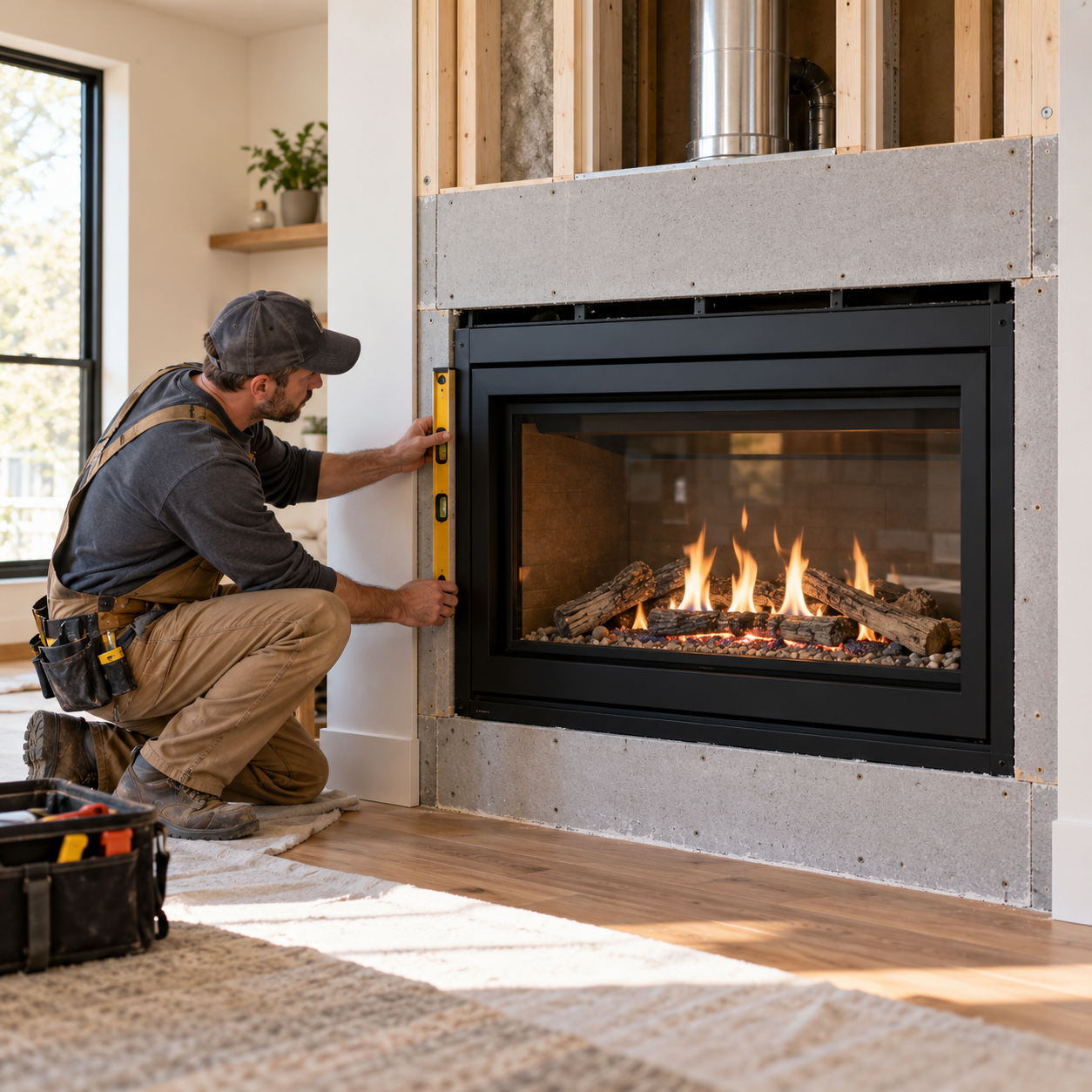
Gas fireplace installation cost ranges from approximately $2,300 to $10,000 in HomeGuide’s published US estimate, depending on the appliance, venting, materials, and installation scope. The final price depends on the fireplace type, venting system, gas-line requirements, electrical work, wall construction, finishes and project location.
A straightforward gas insert installation into an existing masonry fireplace may cost considerably less than creating a completely new fireplace in a finished room. Premium units, long gas-line routes, structural alterations, custom surrounds and extensive finish work can push the project beyond the typical range.
This guide explains gas fireplace installation costs, available system types and the important details homeowners should compare in contractor proposals.
Table of Contents
Average Gas Fireplace Installation Cost
| Project component | Typical cost |
|---|---|
| Gas fireplace unit | $1,000–$5,000 |
| Installation labor | $1,200–$6,000 |
| Gas-line work | $350–$2,000 |
| Electrical work | $150–$800 |
| Venting | $500–$2,500 |
| Permit and inspection | $100–$500 |
| Typical total installed cost | $2,300–$10,000 |
Do not add every row together automatically. These ranges describe different components and project scopes, and some contractor packages already include several items. Ask for a complete installed total that identifies what is included, excluded, or subject to an allowance.
These are general US estimates. A simple project with existing utilities may cost less, while a premium fireplace with extensive construction and finishing can cost more.
HomeGuide reports an average installed price of approximately $2,300 to $10,000, depending on the fireplace size, venting type, and materials.
Gas Fireplace Cost by Project Type
| Fireplace project | Typical installed cost |
|---|---|
| Gas log set | $300–$2,000 |
| Gas fireplace insert | $2,000–$5,000 |
| Ventless gas fireplace | $2,000–$6,000 |
| Direct-vent gas fireplace | $3,500–$10,000 |
| New custom gas fireplace | $5,000–$15,000+ |
The correct category matters when comparing estimates. A contractor quoting a gas log set is not pricing the same project as one proposing a sealed direct-vent fireplace with a new framed enclosure.
Gas Logs, Inserts and Built-In Fireplaces
Gas Log Set
Gas logs are installed inside an existing suitable fireplace. They primarily provide appearance and supplemental heat rather than functioning as a new sealed heating appliance.
The project may require:
- A functional chimney or approved venting arrangement
- Gas-line installation
- Burner and log set
- Safety controls
- Inspection of the existing fireplace and chimney
- Damper modifications where required
Gas logs generally cost less than complete gas inserts or new built-in fireplaces.
Gas Fireplace Insert
A gas insert is a self-contained appliance installed inside an existing masonry or approved prefabricated fireplace opening.
A typical installation may include:
- Fireplace insert
- Decorative front and surround
- Gas connection
- Electrical connection
- Chimney liners or direct-vent components
- Chimney cap
- Controls or remote
- Installation and testing
HomeGuide reports that a gas fireplace insert generally costs $2,000 to $5,000 installed, while basic gas log installations commonly range from $300 to $2,000.
Built-In Gas Fireplace
A built-in gas fireplace is installed within a framed wall or newly created enclosure. It may be selected when the house does not already have a fireplace or when an existing unit is being completely replaced.
This project can require:
- Wall framing
- Noncombustible materials
- Exterior vent penetration
- Gas piping
- Electrical wiring
- Drywall and painting
- Stone, tile or other finish material
- Mantel construction
- Flooring repair
- Permit and inspection
The finish work can sometimes cost as much as, or more than, the fireplace equipment.
Direct-Vent Versus Ventless Gas Fireplaces
Direct-Vent Gas Fireplace
A direct-vent fireplace is a sealed combustion appliance. It draws combustion air from outside and sends exhaust gases outdoors through an approved venting system.
Potential advantages include:
- Sealed combustion chamber
- No traditional masonry chimney required
- Better control of indoor air
- Flexible placement where proper venting is possible
- Good heating performance
Installation costs depend heavily on the vent route. A short horizontal route through an exterior wall may cost less than a complex vertical system through several floors or the roof.
Ventless Gas Fireplace
A ventless or vent-free unit operates without an exterior exhaust system. This can reduce construction and venting expenses, but these appliances are restricted or prohibited in some jurisdictions and may not be suitable for every household.
Before considering one, verify:
- State and local regulations
- Room-size requirements
- Manufacturer clearances
- Ventilation requirements
- Moisture concerns
- Carbon-monoxide alarm requirements
- Whether the installation is allowed in bedrooms or other restricted rooms
A contractor should not propose a ventless system without first confirming that it is permitted in your location.
What Affects Gas Fireplace Installation Cost?
1. Fireplace Type
A simple gas log set generally costs less than an insert. An insert normally costs less than a completely new built-in direct-vent fireplace with framing and finish work.
Confirm exactly which system each contractor is quoting.
2. Equipment Size and Features
Larger units and premium models may include:
- Higher heating capacity
- Larger viewing areas
- Decorative media
- Realistic logs or ember beds
- Blowers
- Thermostatic controls
- Remote controls
- Smart-home compatibility
- Multi-sided or linear designs
- Premium glass and trim
Compare the exact manufacturer and model number—not just the phrase “gas fireplace.”
3. Gas-Line Installation
The total gas-line cost depends on:
- Distance from the existing gas supply
- Pipe diameter
- Required fireplace input
- Route through finished or unfinished areas
- Access below floors or above ceilings
- Whether walls must be opened
- Pressure-testing requirements
- Need for a new shutoff valve
The contractor should confirm that the existing gas system can support the additional appliance load.
4. Natural Gas Versus Propane
Natural gas may be convenient where utility service already exists. Propane may be used in rural areas or homes without natural-gas service.
A propane installation may also require:
- Storage tank
- Tank placement
- Regulator
- Exterior piping
- Fuel delivery arrangements
- Conversion components approved for the selected fireplace
Confirm that the fireplace is configured for the correct fuel. Appliances should not be converted without manufacturer-approved parts and qualified installation.
5. Venting Requirements
The vent type and route are major cost factors. Pricing can increase when the project requires:
- Long horizontal or vertical runs
- Multiple elbows
- Roof penetration
- Exterior wall penetration
- Firestopping
- Chase construction
- Replacement of damaged chimney components
- New liners in an existing masonry chimney
- Access through finished rooms
Ask for the venting system to be shown separately in the contractor’s estimate.
6. Electrical Work
Many modern gas fireplaces need electricity for ignition, controls, blowers, lights or remote systems.
Electrical work may include:
- New receptacle
- Dedicated circuit
- Wiring inside the fireplace enclosure
- Switch or control wiring
- Access through finished walls
- Electrical permit and inspection
7. Framing and Structural Work
Installing a new built-in fireplace may require changes to wall framing or creation of a new enclosure.
The project must maintain the clearances specified by the fireplace manufacturer. Wood framing, insulation and other combustible materials cannot be placed inside required clearance zones.
8. Surround, Mantel and Finish Materials
Finishes have a substantial effect on the final project price.
Common options include:
- Painted drywall
- Ceramic or porcelain tile
- Brick veneer
- Manufactured stone
- Natural stone
- Metal panels
- Wood mantel
- Custom cabinetry
- Built-in shelving
Ask whether the contractor’s price includes the finished appearance shown in the proposal or only the operating fireplace unit.
9. Existing Fireplace and Chimney Condition
A gas insert installation may uncover:
- Damaged chimney masonry
- Missing or deteriorated liner
- Water intrusion
- Inadequate opening dimensions
- Combustible materials too close to the opening
- Previous unapproved modifications
- Structural cracks
- Obstructions inside the flue
An inspection before the final quote can reduce the risk of unexpected charges.
10. Permit and Inspection Requirements
A gas fireplace project may require mechanical, gas, electrical or building permits.
Confirm whether the estimate includes:
- Permit fees
- Application preparation
- Required drawings
- Gas-pressure testing
- Inspection coordination
- Correction of failed inspections
- Final approval documentation
New Installation Versus Replacement
Replacing an Existing Gas Fireplace
Replacement may cost less when the new appliance is compatible with the existing opening, venting and utility connections.
However, installers should not assume that old components can automatically be reused. The new manufacturer’s instructions may require different venting, clearances, electrical connections or gas-line capacity.
Installing a Fireplace in a New Location
Adding a fireplace where none previously existed can require several trades:
- Fireplace installer
- Licensed gas professional
- Electrician
- Carpenter or framer
- Drywall contractor
- Tile or stone installer
- Painter
- Roofer when venting penetrates the roof
A complete quote should identify who coordinates these trades and which work is excluded.
Gas Fireplace Safety Considerations
Gas fireplaces are fuel-burning appliances and require proper installation, venting and maintenance.
The US Consumer Product Safety Commission recommends professional inspection of fuel-burning heating systems, including fireplaces, chimneys, flues, and vents. It also recommends carbon monoxide alarms on every level of the home and in outside sleeping areas.
Before using the fireplace, confirm that:
- The gas connections have been tested
- Vent components are correctly installed
- Required clearances are maintained
- The exterior termination is unobstructed
- Safety shutoffs operate correctly
- Smoke and carbon-monoxide alarms are installed and working
- The fireplace has passed required inspections
- The installer has demonstrated proper operation
Do not use the fireplace if you notice soot accumulation or damaged venting; arrange assessment by a qualified professional. If a carbon-monoxide alarm sounds, immediately move everyone outside to fresh air, call 911 or the fire department, and do not re-enter until emergency responders give permission. Do not reuse an appliance identified as the cause until it has been professionally serviced.
How to Compare Contractor Quotes
Request written, itemized proposals showing:
- Fireplace manufacturer and model
- Natural-gas or propane configuration
- Heating capacity
- Fireplace unit price
- Decorative front and accessories
- Gas-line work
- Electrical work
- Venting type and route
- Framing and firestopping
- Noncombustible materials
- Mantel and surround
- Wall and floor repairs
- Permit and inspection fees
- Existing-fireplace removal
- Debris disposal
- Startup and testing
- Equipment warranty
- Labor warranty
- Specific exclusions
A lower quote may exclude the finish work, electrical connection or gas-line modification included in another proposal.
For more information about contractor pricing structures, see our guide to General Contractor Fees Explained.
Questions to Ask a Gas Fireplace Installer
Before signing an agreement, ask:
- Is this a gas log set, insert or complete built-in fireplace?
- Is the unit direct-vent, natural-draft or ventless?
- Is this fireplace type permitted in my jurisdiction?
- How was the required heating capacity determined?
- Can the existing gas system support the new appliance?
- What gas-line work is included?
- What electrical work is required?
- What venting system will be installed?
- Can any existing chimney or vent components be reused?
- Are framing and noncombustible materials included?
- Does the quote include the completed surround and mantel?
- Which permits and inspections are required?
- Who will coordinate the different trades?
- What maintenance does the manufacturer require?
- What equipment and labor warranties are included?
- What work is specifically excluded from the quoted price?
For additional contractor-selection guidance, see:
How to Hire a Contractor: 21-Point Checklist
Is a Gas Fireplace Worth the Cost?
A gas fireplace may be worth considering when homeowners want:
- Convenient operation
- Supplemental room heating
- Fireplace appearance without handling firewood
- Better use of an existing masonry fireplace
- A focal point for a living area
- Thermostatic or remote control
- Less ash and debris than a wood-burning fireplace
It may be less attractive when the project requires a long gas-line route, complicated venting, major structural work or expensive custom finishes.
Compare the total installed cost with other heating and design alternatives—not only the price of the fireplace unit.
Frequently Asked Questions
How much does it cost to install a gas fireplace?
A professionally installed gas fireplace generally costs $2,300 to $10,000. Simple gas log projects may cost less, while premium built-in fireplaces with extensive construction can exceed this range.
How much does a gas fireplace insert cost?
A gas fireplace insert commonly costs $2,000 to $5,000 installed, depending on the equipment, venting, gas connection and condition of the existing fireplace.
Can a gas fireplace be installed without a chimney?
A direct-vent gas fireplace does not require a traditional masonry chimney, but it does require an approved exterior venting system.
Does a gas fireplace need electricity?
Many modern gas fireplaces need electrical power for ignition, blowers, controls, lights or remote systems. Confirm the requirements of the selected model.
Can I install a gas fireplace myself?
Gas piping, venting, electrical work and code compliance create significant safety concerns. Professional installation by appropriately qualified contractors is strongly recommended and may be required by local regulations.
Does a gas fireplace need a carbon-monoxide alarm?
A fuel-burning appliance can produce carbon monoxide. Follow local requirements and manufacturer instructions. The CPSC recommends carbon-monoxide alarms on every level of the home and outside sleeping areas.
How long does gas fireplace installation take?
A simple insert or replacement may be completed quickly after utility work and preparation. A completely new fireplace with framing, venting and custom finishes may require several visits over multiple days or weeks.
Final Takeaway
Gas fireplace installation typically costs $2,300 to $10,000, but the equipment price alone does not represent the full project cost. Gas piping, electrical work, venting, framing, finish materials, permits and repairs can materially change the total.
Before approving an estimate, confirm the exact fireplace model, venting arrangement, utility modifications, completed finish and excluded work. Comparing itemized proposals will help prevent an attractive equipment price from becoming an unexpectedly expensive construction project.
Sources and Further Reading
HomeGuide — Gas Fireplace Installation Cost
HomeGuide — Gas Fireplace Insert Cost
CPSC — Carbon Monoxide Questions and Answers
CPSC — Home Heating Equipment
Editorial Note
Cost ranges are general US estimates and may vary according to location, equipment, labor conditions, code requirements, materials, and project complexity. Obtain itemized estimates from qualified local professionals before making a purchasing or contracting decision.