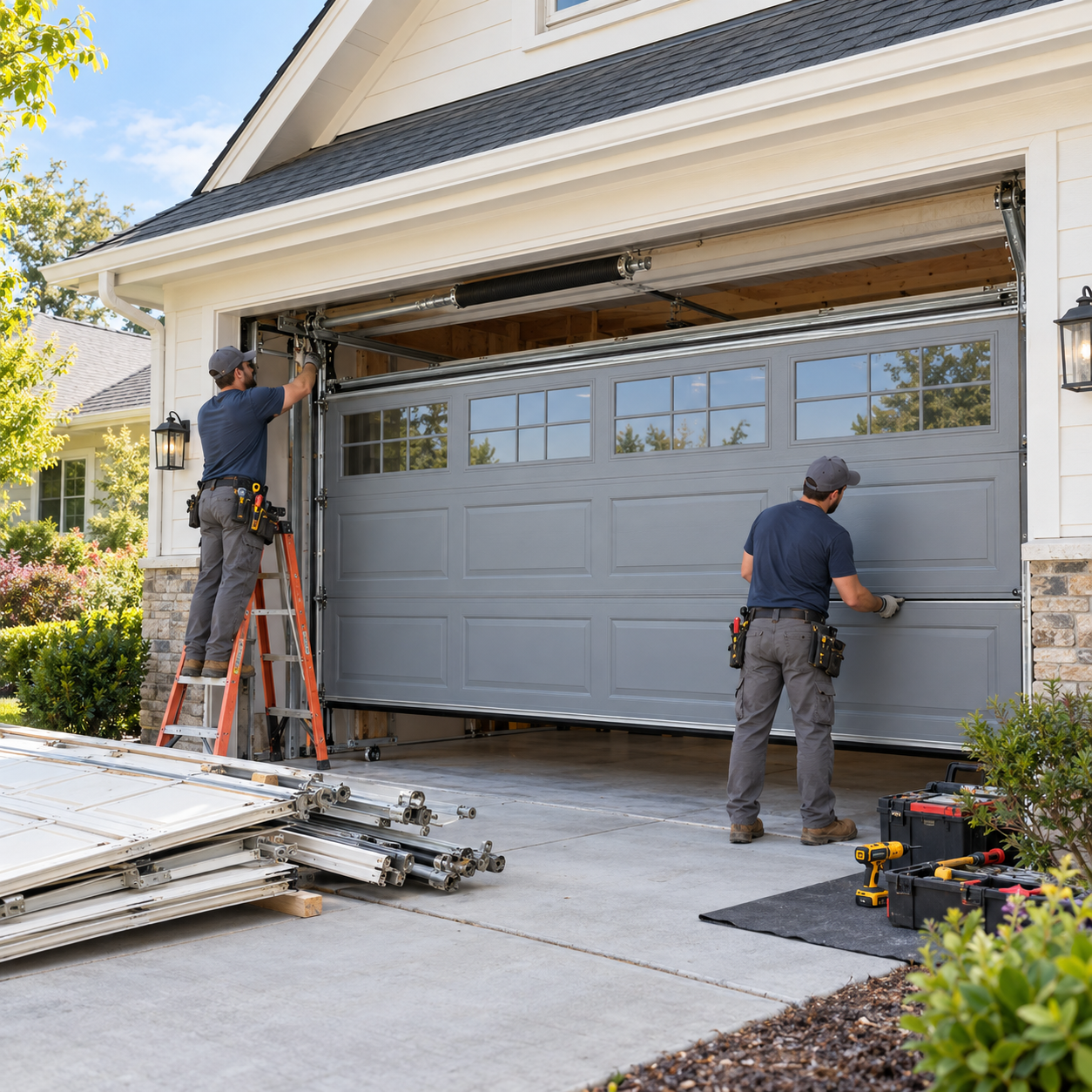
Replacing a garage door can improve security, operation, energy performance and the appearance of a home. However, garage door replacement cost can vary considerably based on door size, material, insulation, design, hardware, opener compatibility, wind-rating requirements and installation conditions.
This guide explains typical 2026 prices, what a complete replacement may include and how homeowners can compare contractor proposals before approving the work.
Quick Answer
A complete garage door replacement commonly costs approximately $700 to $2,700 per door, including the door and professional installation. Basic single-car steel doors generally fall near the lower end, while insulated, double-width, custom wood, glass or wind-rated doors can cost substantially more.
A standard replacement may cost approximately:
| Garage-door project | Typical installed planning range |
|---|---|
| Basic single-car door | $700–$1,500 |
| Insulated single-car door | $1,000–$2,500 |
| Basic double-car door | $1,200–$2,500 |
| Insulated double-car door | $1,500–$3,500 |
| Custom wood, glass or premium door | $3,000–$10,000+ |
| New garage-door opener | $300–$900 |
These are national planning ranges, not quotations for a particular property. Custom sizes, structural modifications, premium finishes, high-wind requirements and difficult electrical or framing work can increase the final price.
Garage Door Replacement Cost by Door Size
Residential garage doors are commonly sold in standard single-car and double-car sizes. Height, width and thickness affect material, hardware and installation costs.
| Approximate door size | Common application | Typical installed planning range |
|---|---|---|
| 8 × 7 feet | Small single-car opening | $700–$1,800 |
| 9 × 7 feet | Standard single-car opening | $800–$2,000 |
| 10 × 8 feet | Oversized single-car opening | $900–$2,500 |
| 16 × 7 feet | Standard double-car opening | $1,200–$3,500 |
| 16 × 8 feet | Taller double-car opening | $1,400–$4,000 |
| Custom or extra-wide door | Nonstandard opening | $2,000–$10,000+ |
The contractor should verify the finished opening, headroom, side room, backroom and track arrangement before ordering the door.
Do not assume that an advertised door price includes installation, tracks, springs, removal of the existing door or modifications to the opening.
Garage Door Replacement Cost by Material
Material affects appearance, weight, maintenance, insulation, resistance to dents and weather exposure.
| Door material | Typical characteristics | General cost position |
|---|---|---|
| Steel | Widely available, durable and offered in many styles | Low to high |
| Aluminum | Lightweight and resistant to rust but more easily dented | Low to medium |
| Vinyl | Resistant to moisture and corrosion with limited design choices | Medium |
| Fiberglass | Can imitate wood and resist moisture | Medium to high |
| Composite or faux wood | Wood-like appearance with reduced maintenance | Medium to high |
| Natural wood | Premium appearance but requires maintenance | High |
| Aluminum and glass | Modern appearance and extensive glazing | High |
Steel Garage Doors
Steel is one of the most common residential garage-door materials. Prices vary based on steel thickness, construction, insulation, finish and design.
A basic non-insulated steel door generally costs less than a multi-layer insulated steel door with decorative windows and a wood-grain finish.
Ask the installer to identify:
- Door model and manufacturer
- Steel thickness or construction
- Number of layers
- Insulation type and thickness
- Exterior and interior finish
- Corrosion warranty
- Hardware specification
Wood Garage Doors
Natural wood doors can provide a distinctive appearance but are normally more expensive and heavier than basic steel doors. They may also require periodic painting, staining or sealing.
The quotation should explain whether the price includes factory finishing, site finishing and future maintenance requirements.
Aluminum and Glass Garage Doors
Aluminum-frame doors with glass panels are frequently selected for contemporary homes. Their price depends on size, frame finish, glass type, insulation and privacy requirements.
Ask whether the proposed glazing is appropriate for safety, climate, privacy and local wind-load requirements.
Single Versus Double Garage Door Cost
A double-width garage door does not necessarily cost exactly twice as much as a single door. It uses more material but may require only one opening, one set of tracks and one opener.
Homes with two single doors may have:
- Greater flexibility if one door or opener fails
- A structural column between the openings
- Two openers and two sets of operating hardware
- Higher combined maintenance costs
A single double-width door may provide a wider opening but requires heavier-duty springs, tracks and opener capacity.
When changing from two single doors to one double door, structural alterations may be required. This is more than a simple door replacement and may need engineering, framing, exterior-finishing and permit work.
What Is Included in Garage Door Replacement?
A complete replacement proposal may include:
- Site measurement
- New door sections
- Tracks and brackets
- Rollers and hinges
- Torsion or extension spring system
- Cables and drums
- Bottom seal and perimeter weatherstripping
- Handles and interior hardware
- Removal of the existing door
- Disposal of old materials
- Professional installation
- Adjustment and balancing
- Connection to an existing compatible opener
- Safety testing
- Cleanup
- Manufacturer and workmanship warranty documents
The quotation should clearly identify anything that is excluded or reused.
Common exclusions include:
- New automatic opener
- Electrical outlet or wiring
- Framing repairs
- Header or structural modifications
- Exterior trim
- Painting or staining
- Permit fees
- Wind-load upgrades
- Custom glass
- Smart-home accessories
- Hauling or disposal
Material Cost Versus Installation Cost
The advertised door price may represent only the door itself. A complete project can also include installation labor, removal, disposal, hardware, opener work, trim and modifications to the opening.
HomeGuide reports that installation labor commonly adds approximately $150 to $700, while removing an existing door can add approximately $50 to $250 when it is not already included.
To understand contractor overhead, labor charges and pricing methods, review our guide to general contractor fees.
Ask contractors to separate:
- Door and factory options
- Tracks, springs and hardware
- Installation labor
- Existing-door removal
- Disposal
- Opener installation
- Electrical work
- Framing or trim work
- Permit fees
- Optional upgrades
This breakdown makes it easier to compare proposals that appear similar but contain different scopes.
Factors That Affect Garage Door Replacement Cost
Door Size
Larger and taller doors require more material and heavier operating hardware. Oversized or nonstandard doors may need to be custom manufactured.
Door Construction
Garage doors may use single-layer, double-layer or three-layer construction. Multi-layer doors can provide improved stiffness, insulation and interior appearance but usually cost more.
Insulation
Insulated doors generally cost more than non-insulated doors. The price depends on insulation type, thickness and construction.
Insulation may be more valuable when:
- The garage is attached to the house
- Living space is located above the garage
- The garage is heated or cooled
- The garage is used as a workshop
- The property experiences extreme temperatures
- Noise reduction is important
Do not compare insulation using only a broad description such as “insulated.” Ask for the stated R-value or other applicable performance information for the exact door model.
Material and Finish
Basic steel and aluminum doors are generally less expensive than custom wood, composite, glass or specialty doors. Decorative finishes, custom colors and factory-applied coatings increase the price.
Windows
Windows increase material cost and can affect privacy, security, insulation and appearance. The quotation should identify the glass type, pattern, location and whether insulated or safety glazing is included.
Tracks, Springs and Hardware
A new door may require new tracks, springs, cables, rollers, brackets and reinforcing components. Reusing incompatible or deteriorated hardware can affect operation and safety.
The contractor should confirm that the spring system and opener are correctly sized for the new door’s weight.
Existing Opening Condition
Rotten wood, damaged jambs, uneven flooring, deteriorated trim or an out-of-square opening can require additional work.
The contract should state how concealed or unexpected conditions will be documented and priced.
Structural Modifications
Changing the width or height of an opening may require structural framing, a new header, exterior repairs and building approval.
Ask whether the garage-door installer will perform this work or whether a separate qualified contractor is required.
Labor and Location
Labor rates vary by region. Difficult access, travel distance, limited working space and local disposal costs can also affect the quotation.
Custom Design
Custom panel patterns, carriage-house styling, decorative hardware, unusual sizes, premium wood species and specialty glazing can substantially increase manufacturing time and price.
Insulated Versus Uninsulated Garage Doors
An uninsulated door may be suitable for a detached garage used primarily for vehicle storage. An insulated door may provide better temperature control, stiffness and noise reduction.
Common insulation materials include:
- Polystyrene panels
- Polyurethane foam
- Reflective or retrofit insulation products
Polyurethane may provide greater insulating performance for a given thickness, but the actual result depends on the complete door construction.
Before paying for an insulation upgrade, consider:
- Whether the garage is attached or detached
- Climate
- Air leakage around the door
- Wall and ceiling insulation
- Frequency of garage use
- Heating or cooling
- Living space above or beside the garage
A highly insulated door cannot compensate for major gaps, uninsulated walls or poor weatherstripping.
Garage Door Opener Replacement Cost
A new garage door does not always require a new opener. The existing opener may be retained if it is compatible, properly sized and in safe operating condition.
A new garage-door opener commonly costs approximately $300 to $900 installed, depending on drive type, lifting capacity, controls and smart features.
Opener options can include:
- Chain drive
- Belt drive
- Screw drive
- Wall-mounted or jackshaft opener
- Battery backup
- Wi-Fi connectivity
- Integrated lighting
- Keypad access
- Vehicle controls
- Camera or monitoring features
The installer should confirm:
- Compatibility with the new door
- Required lifting capacity
- Electrical supply
- Safety-sensor operation
- Manual-release operation
- Battery-backup requirements, where applicable
- Whether reinforcement is required at the opener attachment point
The U.S. Consumer Product Safety Commission states that automatic residential garage-door operators must comply with federal safety requirements, including entrapment-protection provisions.
Repair Versus Complete Replacement
A damaged garage door does not always require complete replacement.
Repair may be reasonable when:
- Damage is limited to hardware or a replaceable component
- The door is structurally sound
- Replacement sections remain available
- The tracks are properly aligned
- The door can be safely balanced
- The repair cost is modest relative to replacement
Complete replacement may be more appropriate when:
- Multiple sections are damaged
- The door is severely rusted, warped or deteriorated
- Replacement panels are unavailable
- The door repeatedly comes off its tracks
- Hardware is outdated or incompatible
- The door lacks needed wind resistance
- Repair costs approach the price of a new system
- The homeowner wants improved insulation or appearance
Ask the contractor to explain whether the recommendation is based on safety, structural condition, part availability, performance or appearance.
Wind-Rated and Impact-Resistant Doors
Garage doors in high-wind or hurricane-prone regions may need to meet specific local design-pressure and impact-resistance requirements.
A wind-rated door may include:
- Reinforced door sections
- Heavier tracks
- Additional brackets
- Stronger hardware
- Wind-load labels or documentation
- Impact-resistant components where required
Do not assume that any heavy or insulated door is automatically wind-rated.
Ask the installer to provide:
- Required local wind rating
- Exact approved door model
- Product-approval documentation
- Design-pressure information
- Permit responsibility
- Required inspection documentation
The local building department should confirm applicable requirements.
How to Compare Garage Door Contractor Quotes
Obtain at least three written proposals when practical and give each contractor the same project requirements.
Before selecting an installer, use our 21-point contractor hiring checklist to review licensing, insurance, references, contract terms and payment safeguards.
Every proposal should identify:
- Contractor’s legal business name
- Required license or registration
- Insurance coverage
- Exact door dimensions
- Manufacturer and model number
- Door material and construction
- Insulation specification
- Color and finish
- Window design and glass type
- Track and spring system
- Hardware included
- Wind rating, when required
- Existing-door removal
- Disposal
- Opener work
- Electrical work
- Trim and weatherstripping
- Permit responsibility
- Delivery time
- Installation date
- Payment schedule
- Manufacturer warranty
- Workmanship warranty
- Exclusions and additional charges
Do not compare only the final totals. One quotation may include removal, new tracks, new springs, perimeter seals and disposal while another includes only the door and basic installation.
Important Questions to Ask the Installer
- What exact manufacturer and door model are included?
- Is the door a standard or custom size?
- What material and construction are specified?
- What insulation and stated R-value are included?
- Are windows included, and what type of glass will be used?
- Will the existing tracks, springs or hardware be reused?
- Is the existing opener compatible with the new door?
- Is opener replacement included?
- Does the door meet local wind-load requirements?
- Who will obtain the permit?
- Is removal and disposal of the existing door included?
- Are trim and weatherstripping included?
- Who will complete any framing or structural work?
- How will unexpected damage be documented and priced?
- How long will manufacturing and delivery take?
- What manufacturer warranty applies?
- What does the workmanship warranty cover?
- Who will register the warranty?
- What maintenance will the new door require?
- What safety testing will be completed before handover?
Important answers should appear in the written proposal or contract.
Manufacturer Warranty Versus Workmanship Warranty
Garage-door projects may include separate product and installation warranties.
A manufacturer’s warranty may cover qualifying defects in door sections, finish, hardware or other specified components. Coverage and duration can vary between components.
A contractor’s workmanship warranty normally covers defined installation-related problems for the stated period.
Before signing, confirm:
- Which components are covered
- Warranty duration
- Finish and corrosion exclusions
- Whether labor is included
- Whether coverage is prorated
- Maintenance requirements
- Transferability
- Claim procedure
- Who pays for service calls
- Whether the warranty must be registered
Do not rely only on descriptions such as “lifetime warranty.” Read the warranty’s definitions, limitations and exclusions.
Garage Door Safety
Garage doors are heavy moving systems that use springs, cables and other components under considerable tension.
Homeowners should not attempt to adjust or replace springs, cables or bottom brackets without appropriate training and equipment. A sudden release of stored spring tension can cause serious injury.
After installation, the contractor should demonstrate:
- Smooth opening and closing
- Proper door balance
- Manual-release operation
- Photoelectric safety sensors
- Automatic reversing action
- Remote controls and keypads
- Locking arrangements
- Routine inspection and maintenance
Keep children away from controls and moving doors. Do not allow anyone to stand or walk beneath a moving garage door.
How to Control Garage Door Replacement Costs
- Obtain several itemized proposals.
- Retain the existing opener if it is safe and compatible.
- Select a standard size when the opening permits.
- Compare exact models rather than general descriptions.
- Separate essential work from decorative upgrades.
- Confirm whether removal and disposal are included.
- Ask about trim, electrical and framing exclusions.
- Select insulation appropriate to the garage’s actual use.
- Establish unit prices or approval procedures for additional work.
- Avoid changing the design after the door has been ordered.
- Verify warranty and maintenance requirements before purchasing.
The lowest quotation may not provide the best value if it excludes necessary hardware, removal, permits or safety work.
Frequently Asked Questions
How much does garage door replacement cost?
A garage door replacement commonly costs approximately $700 to $2,700 per door installed. Basic single-car steel doors may cost less, while double, insulated, wind-rated and custom doors can cost considerably more.
How much does a two-car garage door cost?
A standard double-car garage door may cost approximately $1,200 to $3,500 installed. Premium materials, insulation, windows, custom sizing and wind-load requirements can raise the price.
Does the replacement price include a garage-door opener?
Not always. Many quotations cover the door and installation but exclude a new opener. Ask whether the existing opener will be reused or whether an additional $300 to $900 should be allowed for replacement.
Is an insulated garage door worth the additional cost?
It may be worthwhile for an attached, heated or cooled garage, a workshop or a garage below living space. Its value depends on climate, garage use, air leakage and the insulation of the surrounding walls and ceiling.
Can only one damaged garage-door panel be replaced?
Sometimes. Panel replacement depends on the manufacturer, model, color, age and availability of matching sections. If multiple sections or major operating components are damaged, complete replacement may provide better value.
Can existing garage-door tracks be reused?
They should be reused only when the door manufacturer and installer confirm compatibility and acceptable condition. Tracks are part of the complete operating system and should not be assumed to fit a different door.
How long does garage door replacement take?
A straightforward replacement can often be completed within several hours. Structural alterations, custom doors, opener work, electrical changes or inspection requirements can extend the schedule.
Does garage door replacement require a permit?
Permit requirements vary by jurisdiction. Permits and product approvals are particularly important when structural changes or wind-rated doors are involved. Confirm requirements with the local building department.
How long does a garage door last?
Service life depends on material, construction, weather exposure, maintenance and the number of operating cycles. Springs, rollers, cables, seals and openers may require attention before the door sections reach the end of their useful life.
Should homeowners replace garage-door springs themselves?
No. Garage-door springs operate under high tension and can cause serious injury. Spring and cable work should be completed by a properly trained garage-door professional.
Final Takeaway
Garage door replacement cost depends on much more than the advertised price of the door. Size, material, insulation, windows, tracks, springs, opener compatibility, removal, trim, structural work, wind requirements and permits can materially change the final quotation.
Request itemized proposals based on the same scope. Confirm the exact door model, operating hardware, insulation, safety provisions, warranty terms and exclusions before signing.
The best proposal is not necessarily the lowest total. It is the proposal that clearly defines the complete system, assigns responsibility for associated work and minimizes the risk of unexpected charges.
Explore our complete collection of home improvement cost guides before planning another major home project.
Sources
HomeGuide — Garage Door Prices https://homeguide.com/costs/garage-door-prices
This Old House — How Much Does a Garage Door Cost? https://www.thisoldhouse.com/home-finances/garage-door-cost
U.S. Consumer Product Safety Commission — Automatic Residential Garage Door Operators
https://www.cpsc.gov/FAQ/Automatic-Residential-Garage-Door-Operators
U.S. Consumer Product Safety Commission — Safety Rules for Automatic Garage Door Openers
https://www.cpsc.gov/Newsroom/News-Releases/1993/Safety-Commission-Publishes-Final-Rules-For-Automatic-Garage-Door-Openers