A failed well pump can leave a home with low pressure, intermittent water, or no water at all. The replacement price depends mainly on the pump type, well depth, horsepower, access, electrical condition, and whether related components such as the pressure tank or drop pipe also need work.
Well pump replacement typically costs $400 to $2,500, with many submersible pump projects falling between $1,000 and $2,500 installed. Shallow-well jet pumps generally cost $400 to $1,000, while deep-well jet pumps commonly cost $500 to $1,400. Constant-pressure systems and difficult deep-well projects can cost considerably more.
Average Well Pump Replacement Cost
| Pump or project type | Typical installed cost |
|---|---|
| Submersible well pump | $1,000–$2,500 |
| Shallow-well jet pump | $400–$1,000 |
| Deep-well jet pump | $500–$1,400 |
| Constant-pressure pump system | $2,000–$5,000 |
| Hand pump | $200–$2,000 |
| Solar well pump | $1,500–$6,500 |
| Pump unit only | $150–$1,700 |
These are national planning ranges rather than fixed bids. The same pump may cost much more to replace in a deep, narrow, obstructed, or difficult-to-access well. Emergency service, electrical repairs, damaged piping, pressure-tank problems, and water-quality testing can also increase the final bill.
Well Pump Cost by Type
Submersible well pump
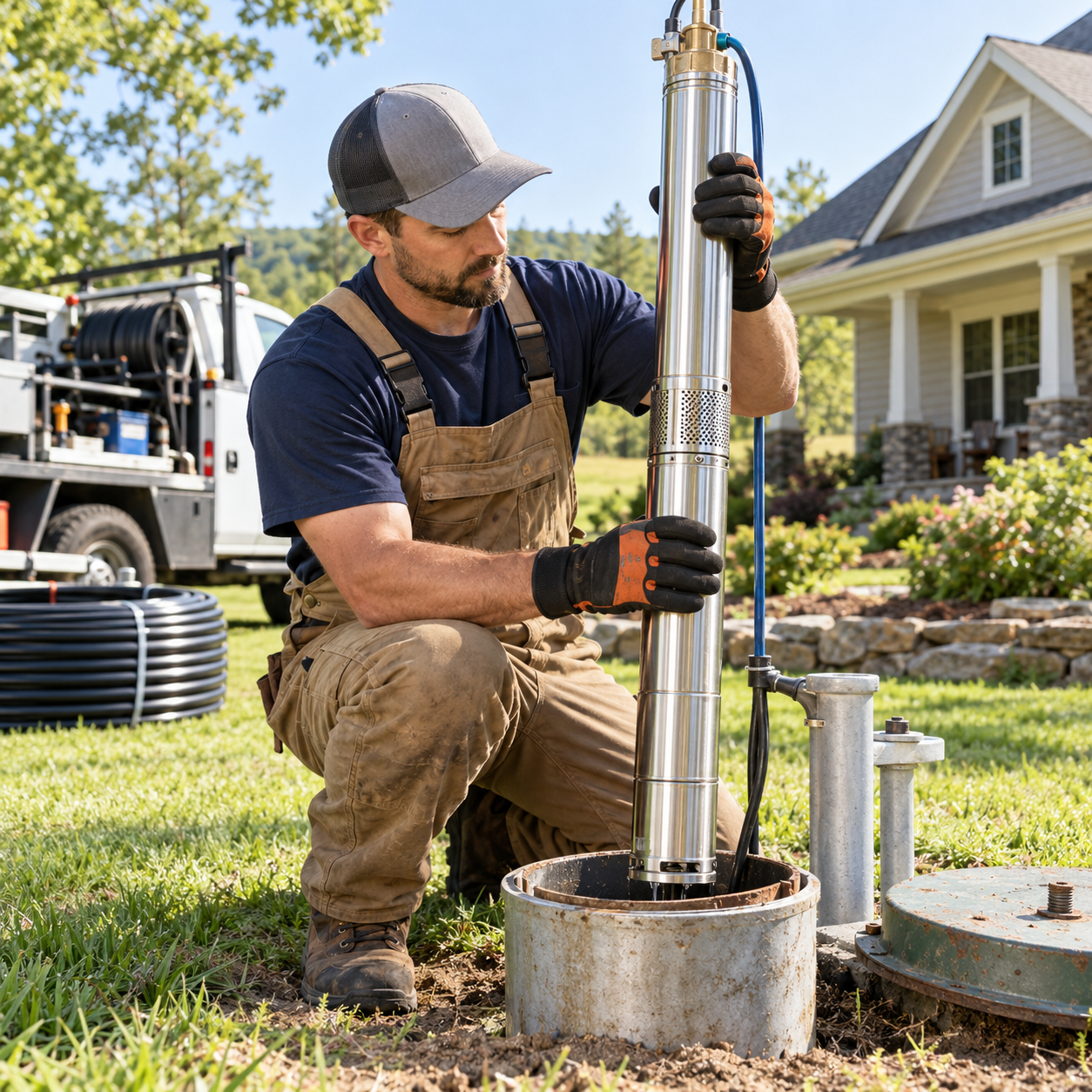
A submersible pump sits below the water level inside the well and pushes water to the surface. It is the most common choice for deeper residential wells. Replacement normally requires pulling the pump, electrical cable, and drop pipe from the well, inspecting the components, installing the new unit, and testing the system.
Installed submersible pump replacement generally costs $1,000 to $2,500. Deep wells, high-capacity pumps, heavy drop pipe, restricted access, and the need for specialized lifting equipment can move the project above that range.
Jet pump
A jet pump is installed above ground and draws water from the well. A shallow-well jet pump generally serves wells up to about 25 feet deep and commonly costs $400 to $1,000 installed. Deep-well jet pumps are designed for greater depths and typically cost $500 to $1,400.
Because the equipment is above ground, a jet pump may be easier and less expensive to access. However, the contractor must still verify the suction piping, foot valve, pressure controls, and proper priming.
Constant-pressure system
A constant-pressure system varies pump speed to maintain steadier pressure when several fixtures operate at once. These systems commonly cost $2,000 to $5,000 installed because they may require a variable-frequency controller, compatible pump, electrical work, and system setup.
The added comfort can be valuable for larger households, irrigation, or homes with high simultaneous demand, but the quote should clearly separate the pump, controller, pressure tank, wiring, and programming.
What Affects Well Pump Replacement Cost?
1. Well depth
Deeper wells usually require more powerful pumps, longer electrical cable, and more drop pipe. Pulling and reinstalling hundreds of feet of equipment takes more time and may require a pump hoist or service rig.
Ask the contractor to confirm the total well depth, static water level, pumping water level, and current pump setting. These are different measurements and can affect equipment selection.
2. Pump size and horsepower
A pump must supply adequate flow and pressure without being oversized. Horsepower alone does not determine suitability; the contractor should consider the pumping level, vertical lift, pipe friction, pressure setting, household demand, and the pump manufacturer’s performance curve.
An oversized pump can cycle frequently if the pressure tank is too small, while an undersized pump may not maintain acceptable pressure during peak use.
3. Pump type
Submersible, jet, and constant-pressure systems use different equipment and installation methods. Replacing a pump with a similar properly sized model is usually simpler than converting the system to another type.
4. Drop pipe, cable, and fittings
The pump is only one part of the system. Corroded steel pipe, damaged plastic pipe, worn cable, unsafe splices, a defective check valve, or a damaged pitless adapter may need replacement at the same time. Ask whether these items are included or treated as possible change orders.
5. Well access
A well surrounded by landscaping, fencing, structures, steep ground, or overhead obstructions can be more difficult to service. The estimate should state who is responsible for clearing access and repairing disturbed areas.
6. Electrical work
The contractor may find a failed control box, pressure switch, capacitor, disconnect, breaker, or wiring rather than a failed pump. New wiring or code corrections may require a licensed electrician and add labor and material costs.
7. Pressure tank condition
A waterlogged or undersized pressure tank can cause rapid pump cycling and shorten pump life. HomeGuide reports $800 to $1,500 as a typical installed range for pressure-tank replacement. The contractor should test the tank and verify that its drawdown capacity matches the new pump and pressure settings.
8. Emergency timing
Evening, weekend, holiday, and same-day calls may include emergency or after-hours charges. If the home has no backup water source, ask for the diagnostic fee, emergency premium, and expected completion time before authorizing work.
Repair or Replace the Well Pump?
Loss of water does not automatically mean the pump has failed. The problem may be a tripped breaker, damaged wire, failed pressure switch, defective control box, leaking pipe, clogged jet, bad check valve, waterlogged pressure tank, or a low-producing well.
HomeGuide reports average well pump repair costs of $300 to $600, although complex repairs can cost more. A repair may make sense when the pump is relatively new and the failure is limited to an accessible component. Replacement becomes more reasonable when an older pump has a failed motor, repeated breakdowns, severe corrosion, or repair costs approaching the price of a properly sized new unit.
Before approving replacement, request a written diagnosis. Ask which tests were performed and whether the contractor checked voltage, amperage, pressure, flow, controls, tank condition, water level, and visible piping.
Signs of a Possible Well Pump Problem
Common warning signs include:
- No water or intermittent water service
- Low or fluctuating water pressure throughout the home
- Faucets that spit air
- Pump operation that is unusually noisy
- Rapid on-and-off cycling
- A pump that runs continuously
- Unexpectedly high electricity use
- Dirty, cloudy, or sediment-filled water
- Breakers that repeatedly trip
Some of these symptoms can indicate problems elsewhere in the system. Low pressure at only one fixture, for example, may result from a clogged aerator or a local plumbing restriction rather than the well pump.
Do not repeatedly reset a tripping breaker or operate equipment with exposed wiring. Well pumps combine electricity and water, and diagnosis should be handled by a qualified professional.
What a Complete Well Pump Quote Should Include
A detailed replacement proposal should identify:
- Pump manufacturer, model, type, horsepower, voltage, and warranty
- Well depth and proposed pump setting
- Expected flow rate and pressure range
- Removal and disposal of the old pump
- Drop-pipe material and length
- Electrical cable, splices, control box, and disconnect work
- Check valves, torque arrestors, safety cable, and fittings where applicable
- Pitless adapter or wellhead work
- Pressure-switch and pressure-tank testing
- System disinfection, flushing, and performance testing
- Water-quality testing, if included
- Permit or inspection charges, when required
- Labor warranty and manufacturer warranty
- Exclusions, allowances, and possible change-order conditions
Compare at least three written estimates when practical. Our contractor hiring checklist can help you evaluate licensing, insurance, references, payment terms, and warranty language.
If overhead, supervision, or markup appears separately, review our guide to general contractor fees before comparing final totals.
Questions to Ask a Well Pump Contractor
- What failed, and what test confirms the diagnosis?
- Can the system be repaired safely, or is pump replacement more economical?
- What are the well depth, static water level, and pumping water level?
- What pump type, horsepower, and flow rate do you recommend?
- How was the replacement pump sized for this home?
- Will the existing drop pipe and electrical cable be reused?
- Have you tested the pressure tank, switch, and control box?
- Are removal, disposal, disinfection, flushing, and water testing included?
- What conditions could increase the quoted price?
- Are permits or inspections required locally?
- What labor and equipment warranties apply?
- How soon can normal water service be restored?
Well Pump Versus Main Water Line Problems
A private-well pump supplies water from the well, while a water service line carries water toward the home. Leaks, blockages, freezing, corrosion, or damage in the underground line can sometimes imitate pump trouble.
Ask the contractor to distinguish between a pump failure, a well-production problem, and a leaking supply line before replacement. Homeowners connected to municipal water—or anyone facing a damaged underground service pipe—should consult our main water line replacement cost guide for the different ownership and excavation issues involved.
Water Testing After Pump Work
Private-well owners are responsible for monitoring their drinking water. The Centers for Disease Control and Prevention recommends testing well water at least annually for total coliform bacteria, nitrates, total dissolved solids, and pH, along with locally important contaminants identified by the health department.
The CDC also recommends testing after replacing or repairing any part of the well system. Ask whether the contractor will disinfect and flush the well, collect a sample, and use a state-certified laboratory—or whether you must arrange those steps separately.
If testing identifies hardness, iron, manganese, or other treatable water-quality concerns, our water softener installation cost guide explains system sizing and quote factors. Treatment equipment should be chosen from actual laboratory results rather than appearance or taste alone.
Bottom Line
Well pump replacement commonly costs $400 to $2,500, with submersible pumps typically costing $1,000 to $2,500 installed. Your final price depends on well depth, pump capacity, access, drop pipe, wiring, controls, pressure-tank condition, and emergency timing.
The best quote is not simply the lowest number. It should document the failure, explain how the new pump was sized, identify every component being reused or replaced, and include testing, warranty, and change-order terms. A complete diagnosis can also prevent paying for a new pump when the actual problem is a pressure tank, electrical control, pipe leak, or low-producing well.
Sources
- HomeGuide — How Much Does a Well Pump Cost to Replace or Install?
- HomeGuide — How Much Does Well Pump Repair Cost?
- HomeGuide — How Much Does It Cost to Replace a Well Pressure Tank?
- Centers for Disease Control and Prevention — Guidelines for Testing Well Water
- U.S. Environmental Protection Agency — Private Drinking Water Wells
Editorial Note
Cost figures are national planning ranges based on the cited sources and may not reflect local labor rates, well depth, equipment availability, permit rules, emergency charges, or site conditions. Obtain a professional diagnosis and compare detailed written estimates before authorizing repair or replacement.