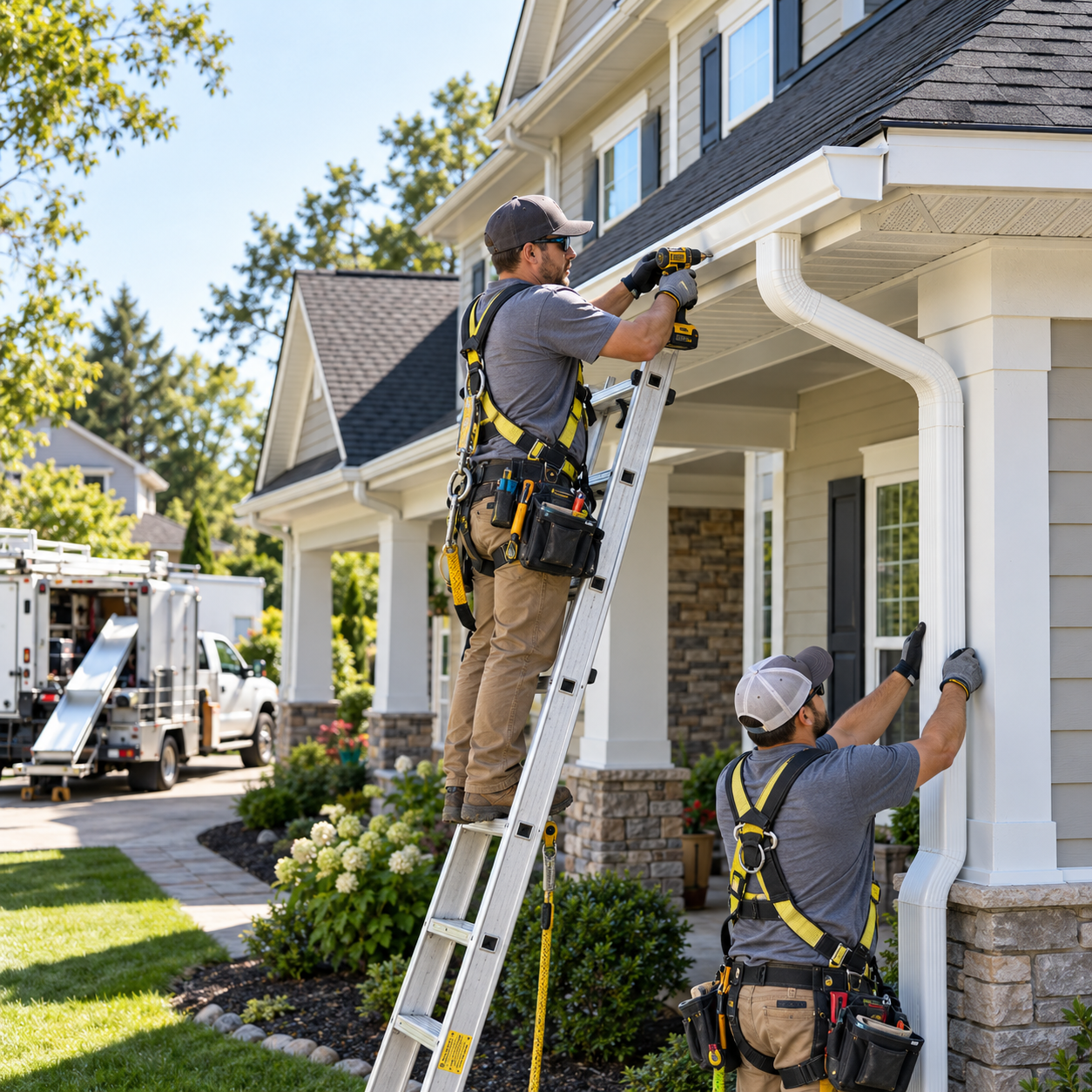
New gutters typically cost $12 to $25 per linear foot installed, or approximately $2,200 to $5,000 for an average home. The final price depends on the gutter material, total length, number of stories, roofline complexity, downspout layout, accessibility, fascia condition, removal work, and optional gutter guards.
Replacement estimates should cover more than the visible gutter channels. A complete drainage system also includes downspouts, outlets, end caps, corners, hangers, flashing, extensions, and a safe discharge location that carries roof runoff away from the foundation.
Average Gutter Installation Cost
| Project size | Typical installed cost |
|---|---|
| 130 linear feet | $1,600–$3,300 |
| 150 linear feet | $1,800–$3,800 |
| 180 linear feet | $2,200–$4,500 |
| 200 linear feet | $2,400–$5,000 |
| 220 linear feet | $2,600–$5,500 |
| 240 linear feet | $2,900–$6,000 |
These planning ranges assume a relatively straightforward single-story installation. A two-story home, steep roof, complex layout, difficult access, premium metal, extensive fascia repair, or underground drainage work can increase the total.
Gutter Cost by Material
| Gutter material | Typical installed cost per linear foot | Approximate cost for 200 feet |
|---|---|---|
| Vinyl or PVC | $8–$12 | $1,600–$2,400 |
| Aluminum | $10–$20 | $2,000–$4,000 |
| Steel | $10–$35 | $2,000–$7,000 |
| Copper | $25–$40+ | $5,000–$8,000+ |
| Wood | $25–$45 | $5,000–$9,000 |
| Zinc | $35–$45 | $7,000–$9,000 |
Material prices are only part of the comparison. Gauge or thickness, finish, fastener quality, seam construction, installer experience, local climate, and maintenance requirements can affect long-term performance.
Aluminum gutters
Aluminum is the most common residential choice because it does not rust, is available in many colors, and can be formed into seamless lengths at the property. Installed prices typically range from $10 to $20 per linear foot.
Compare metal thickness, finish warranty, hanger spacing, and downspout size. Very thin aluminum may dent or deform more easily, particularly where ladders, branches, snow, or ice place stress on the system.
Vinyl gutters
Vinyl or PVC gutters commonly cost $8 to $12 per linear foot installed. They resist rust and may suit simple, budget-conscious projects, but sectional joints can leak and the material may become brittle in very cold conditions or deteriorate under long-term sun exposure.
Steel gutters
Steel gutters generally cost $10 to $35 per linear foot, depending on whether the material is galvanized, coated, or stainless. Steel is stronger than aluminum but is heavier, and some products require careful maintenance to control corrosion.
Copper and zinc gutters
Copper and zinc are premium materials chosen for appearance and long service life. Copper commonly costs $25 to $40 or more per linear foot, while zinc is often $35 to $45 per linear foot. These systems require installers experienced with compatible fasteners, soldered or sealed joints, thermal movement, and material-specific fabrication.
Seamless Versus Sectional Gutters
Seamless gutters are formed on-site from a continuous coil, leaving joints mainly at corners and outlets. Fewer seams can reduce leak opportunities and produce a cleaner appearance. Sectional gutters use shorter factory-made pieces joined along the run and may be less expensive or easier for small repairs.
A seamless quote should state the material, gauge, profile, color or finish, linear footage, number of corners, hanger type and spacing, outlet sizes, downspout count, and warranty. “Seamless” describes how the runs are fabricated; it does not guarantee correct sizing, pitch, fastening, or drainage.
What Affects Gutter Installation Cost?
1. Total linear footage
Contractors normally measure along the roof edges receiving gutters rather than using the home’s floor area alone. A house with several wings, porches, dormers, or roof intersections may require more gutter than another home of the same square footage.
Ask the estimate to state measured gutter footage and downspout footage separately. This makes bids easier to compare and helps identify missing sections.
2. Home height and access
Two- and three-story work requires additional ladders, staging, lifts, labor, and fall protection. Landscaping, narrow side yards, attached structures, power lines, sloped ground, and limited equipment access may also increase installation time.
3. Roof size, pitch, and drainage area
Gutters and downspouts must handle runoff from the roof area feeding each section. Large or steep roof planes, valleys that concentrate water, and regions with intense rainfall may require wider gutters, larger outlets, more downspouts, or a different layout.
The Building America Solution Center advises using adequately sized gutters and downspouts and directing discharge away from the foundation. Ask the installer how the proposed size and downspout spacing were selected rather than accepting a one-size-fits-all system.
4. Gutter profile and size
Five-inch K-style gutters are common on residential homes. Six-inch gutters hold more water and may be appropriate for large roof areas or heavy rainfall, but they use more material and larger components. Half-round gutters have a different appearance and may cost more because of their brackets and installation details.
5. Number of corners and custom fittings
Inside corners, outside corners, bay windows, offsets, end caps, outlets, conductor heads, and custom transitions add fabrication and labor. Complex rooflines may also create short runs that are less efficient to produce and install.
6. Downspout quantity and discharge route
HomeGuide reports typical downspout installation prices of $30 to $75 each, before complicated extensions or underground piping. A low bid may include fewer or smaller downspouts, which can cause overflow even when the gutter channels are adequately sized.
Downspouts should discharge to an approved location where water will not flow back toward the foundation, create erosion, damage neighboring property, or overload a prohibited drain connection. Underground extensions, catch basins, dry wells, and drainage piping should be itemized separately.
7. Fascia, soffit, and roof-edge condition
Rotten, split, or poorly secured fascia cannot reliably support new gutters. HomeGuide reports fascia-board replacement at roughly $5 to $12 per linear foot, with broader soffit-and-fascia work costing more. Ask the contractor to inspect these areas before finalizing the price and explain how concealed damage will be handled.
8. Removal and disposal
Removing existing gutters commonly adds $50 to $200 for a straightforward project, but disposal can cost more for large homes, heavy materials, difficult access, or hazardous conditions. Confirm whether the quote includes removal of all old gutters, downspouts, spikes, brackets, and debris.
9. Gutter guards
Gutter guards can reduce the amount of leaves and debris entering the system but do not eliminate inspection or maintenance. HomeGuide reports broad installed prices of $15 to $45 per linear foot. Compare the guard type, compatibility with the roof and gutter, cleaning access, snow or ice behavior, and warranty exclusions before adding this option.
Repair or Replace the Gutters?
Localized leaks, loose hangers, separated joints, missing end caps, or a damaged short section may be repairable when most of the system remains correctly sized and structurally sound. HomeGuide reports average gutter repair costs of about $100 to $450.
Full replacement may be more practical when gutters are widely rusted, cracked, sagging, incorrectly pitched, repeatedly separating, undersized, or attached to deteriorated fascia. Replacement also allows the contractor to redesign downspout placement and correct chronic overflow or foundation-discharge problems.
Before approving a full replacement, ask the contractor to identify which problems result from the gutter material and which result from roof runoff, clogged outlets, poor pitch, fascia damage, or inadequate drainage at ground level.
Signs Gutters May Need Replacement
Look for:
- Cracks, holes, rust, or widespread corrosion
- Sagging or distorted gutter runs
- Gutters pulling away from the fascia
- Recurring leaks at several seams or corners
- Overflow during moderate rainfall
- Water stains on siding or fascia
- Peeling paint or rotted wood near the roof edge
- Erosion or pooling near downspout outlets
- Dampness or staining near the basement or crawlspace
- Sections that remain full after rain has stopped
Overflow can also result from debris or blocked downspouts. Clean and inspect the system before concluding that complete replacement is required.
What a Complete Gutter Quote Should Include
Each written proposal should identify:
- Total gutter and downspout linear footage
- Material, gauge or thickness, profile, size, color, and finish
- Seamless or sectional construction
- Hanger type, fastener type, and spacing
- Number and location of outlets and downspouts
- Inside and outside corners and custom fittings
- Gutter pitch and drainage direction
- Removal and disposal of existing materials
- Fascia, soffit, flashing, or roof-edge repairs
- Downspout extensions and final discharge locations
- Underground drainage work, if included
- Gutter guards or screens, if included
- Permit charges, when applicable
- Material and workmanship warranties
- Exclusions and possible change-order conditions
- Payment schedule and expected completion time
Compare at least three detailed estimates when practical. Our contractor hiring checklist can help you evaluate credentials, insurance, references, warranties, and payment terms.
If a proposal includes separate supervision, overhead, or markup, review our guide to general contractor fees before comparing the final totals.
Questions to Ask a Gutter Installer
- How many linear feet of gutter and downspout are included?
- What material, gauge, profile, and size are you proposing?
- Why is this gutter size appropriate for my roof and local rainfall?
- How many downspouts will be installed, and where will they discharge?
- Are the gutters seamless or sectional?
- What hanger type and spacing will you use?
- Is the fascia sound enough to support the new system?
- How will concealed fascia or soffit damage be priced?
- Are removal, disposal, and cleanup included?
- Are downspout extensions or underground connections included?
- What material and workmanship warranties apply?
- Are you insured for exterior work at this height?
Gutters, Roofs, and Foundation Protection
Gutters do not repair a damaged roof, and roofing work may require gutters to be temporarily removed or replaced. If roof replacement is planned soon, coordinate the sequence so new gutters are not damaged or unnecessarily removed. Our asphalt shingle roof replacement cost guide explains roof-edge, flashing, decking, and contractor-quote factors.
The purpose of the gutter system is to collect roof runoff and carry it away safely. Poor discharge can saturate soil around the building, contributing to basement moisture, erosion, and foundation stress. If structural movement or cracking is already present, review our foundation repair cost guide and obtain an appropriate professional evaluation rather than assuming gutters alone will correct existing damage.
Bottom Line
Gutter installation typically costs $12 to $25 per linear foot, or around $2,200 to $5,000 for an average home. Aluminum offers a common balance of price and durability, while vinyl may reduce upfront cost and copper or zinc can increase both appearance and longevity at a premium price.
The most useful quote identifies exact footage, material quality, gutter size, hanger spacing, downspout layout, fascia repairs, disposal, drainage extensions, and warranties. Proper sizing and discharge matter as much as appearance: an inexpensive system that overflows or deposits water beside the foundation can create much larger home-repair costs later.
Sources
- HomeGuide — How Much Does Gutter Installation Cost?
- Building America Solution Center — Gutters and Downspouts
Editorial Note
Cost figures are national planning ranges based on the cited sources and may not reflect local labor rates, material availability, permit requirements, roof complexity, access, or hidden fascia damage. Obtain site-specific measurements and compare detailed written estimates before approving installation or replacement.