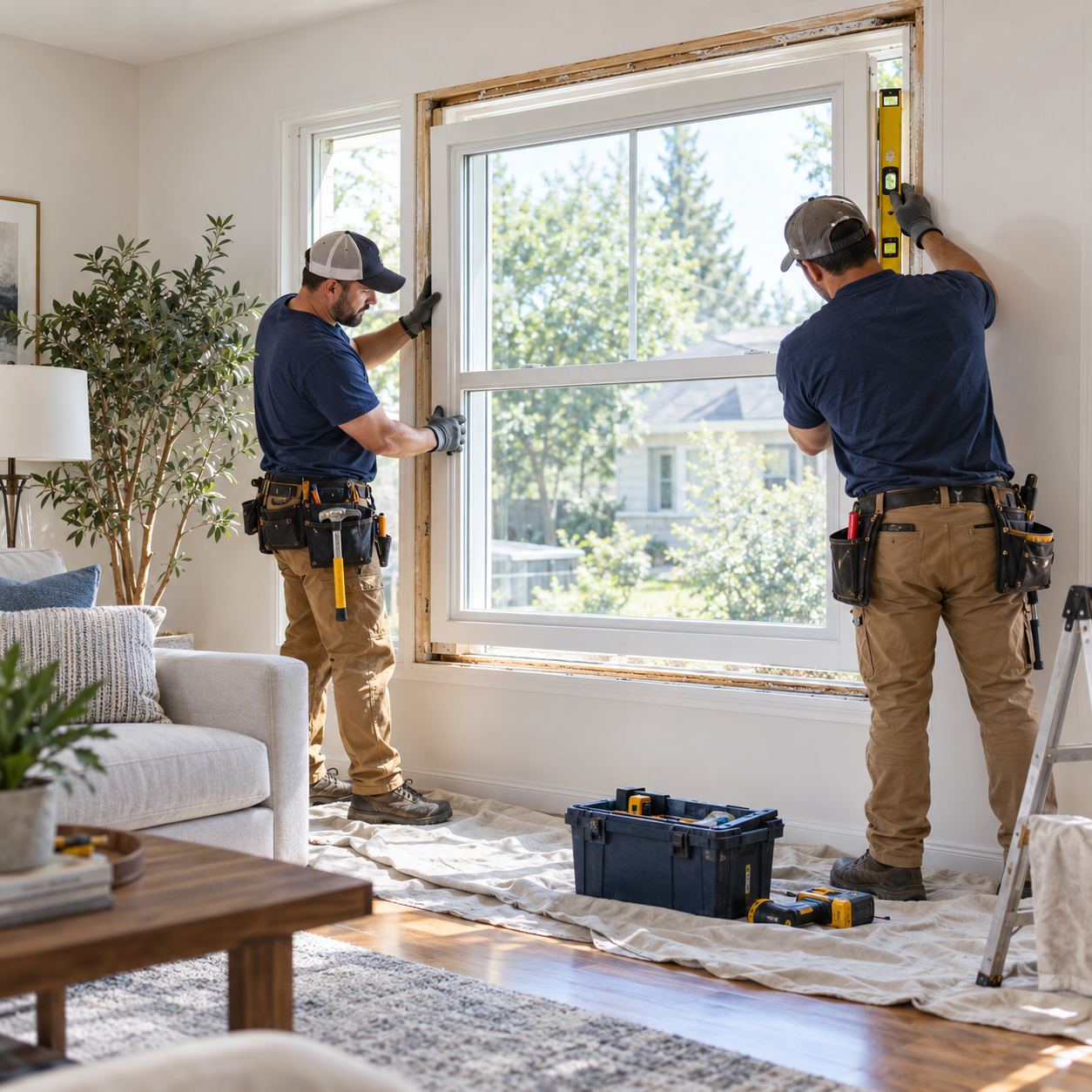
Quick Answer
Window replacement costs typically range from $450 to $1,500 per standard window installed, although basic units may cost less and large, custom or premium windows can cost several thousand dollars each. Replacing 10 to 15 standard windows may cost approximately $4,500 to $22,500.
The final price depends on the window size and style, frame material, glass package, installation method, accessibility, local labor rates and any hidden damage discovered after the old window is removed.
Average Window Replacement Cost
| Project | Typical Cost |
|---|---|
| One standard window installed | $450–$1,500 |
| Five standard windows | $2,250–$7,500 |
| Ten standard windows | $4,500–$15,000 |
| Fifteen standard windows | $6,750–$22,500 |
| Labor per window | $100–$500 |
| Window unit only | $250–$1,400+ |
These figures are planning ranges, not contractor quotations. Actual prices vary considerably by location, window specifications and site conditions.
Window Replacement Cost by Frame Material
Frame material affects the purchase price, energy performance, appearance, maintenance requirements and expected service life.
| Frame Material | Typical Installed Cost per Window |
|---|---|
| Aluminum | $175–$1,000 |
| Vinyl | $200–$1,500 |
| Fiberglass | $400–$2,000 |
| Composite | $400–$2,300 |
| Wood | $800–$3,800 |
Vinyl Windows
Vinyl is widely used because it is relatively affordable, requires little maintenance and provides reasonable insulation. Prices increase for premium colors, reinforced frames, larger sizes and upgraded glass packages.
Fiberglass Windows
Fiberglass frames are strong, dimensionally stable and generally more expensive than entry-level vinyl. They may be suitable where durability, narrow frame profiles or temperature stability are important.
Wood Windows
Wood provides a traditional appearance and is often selected for historic or architecturally detailed homes. It normally costs more and requires protection from moisture, rot and insect damage.
Aluminum Windows
Aluminum frames are strong and slim but generally provide less insulation than vinyl, fiberglass or wood unless they include an effective thermal break.
Composite Windows
Composite products combine materials to balance appearance, durability and energy performance. Specifications vary significantly among manufacturers, so homeowners should compare the complete product rather than relying only on the word “composite.”
Window Replacement Cost by Style
| Window Style | Typical Installed Cost |
|---|---|
| Picture window | $300–$1,300 |
| Single-hung | $300–$2,100 |
| Double-hung | $350–$2,500 |
| Awning | $400–$2,000 |
| Casement | $400–$3,000 |
| Sliding | $300–$2,300 |
| Garden window | $1,000–$4,000 |
| Bay window | $2,000–$6,000 |
| Bow window | $3,000–$8,000+ |
| Egress window project | $3,000–$7,000+ |
A standard-size picture or single-hung window is usually less expensive than a large operating, projecting or custom-shaped window. Bay, bow and egress projects may also require framing, roofing, flashing, excavation or interior finishing.
Pocket Replacement Versus Full-Frame Replacement
The installation method can materially change the quotation.
Pocket or Insert Replacement
A pocket replacement places a new window unit inside the existing frame. It may be appropriate when the frame is square, structurally sound and free from significant moisture damage.
This method usually involves less disturbance to the siding and interior trim. However, it may slightly reduce the visible glass area because the new frame fits inside the old one.
Full-Frame Replacement
A full-frame replacement removes the existing window, frame and related components back to the rough opening. It gives the installer access to flashing, insulation and concealed framing.
Full-frame work generally costs more but may be necessary when there is rot, leakage, poor original installation, frame distortion or a change in window size or style.
Ask every contractor to state clearly whether the proposal includes a pocket replacement or complete full-frame removal. Quotes using different installation methods should not be compared as though they cover identical work.
Important Factors That Affect Window Replacement Cost
1. Window Size and Quantity
Large windows require more material and may need additional workers or lifting equipment. Replacing several windows together may reduce mobilization and per-window labor costs, but the total project price will still increase.
2. Standard Versus Custom Sizes
Standard-size windows are generally easier to source. Custom dimensions, unusual shapes, specialty colors and architectural profiles usually increase manufacturing cost and delivery time.
3. Glass Package
Double-pane glass is common for residential replacement projects. Triple-pane glazing, laminated glass, impact-resistant glass, low-emissivity coatings, gas fills, decorative grids and privacy glass can increase the price.
Compare the complete glass specification, including the whole-window U-factor and solar heat gain coefficient, rather than accepting a general statement such as “energy-efficient glass.”
4. Installation Method
A pocket installation may cost less than full-frame replacement. The contractor should specify what will be removed, what will remain and how the new window will be flashed, insulated and sealed.
5. Accessibility
Second- or third-story windows, restricted side yards, steep terrain and openings above porches or additions can require ladders, scaffolding or special equipment.
6. Existing Damage
Rotten framing, damaged siding, deteriorated trim, water intrusion, mold and insect damage may not be visible until removal begins. Ask how concealed conditions will be priced and documented.
7. Interior and Exterior Finishing
Confirm whether the quote includes:
- Interior casing and trim
- Exterior trim or capping
- Drywall and plaster repairs
- Painting or staining
- Siding repairs
- Caulking and weather sealing
- Removal and disposal of old windows
- Reinstallation of blinds or window treatments
8. Permits and Code Requirements
A same-size replacement may not require the same approvals as enlarging an opening or creating a new window. Egress, tempered-glass, structural and local energy-code requirements can affect the project.
9. Lead-Safe Work
Homes built before 1978 may contain lead-based paint. Window removal can disturb painted surfaces and create hazardous dust. Ask whether the contractor must follow the EPA Renovation, Repair and Painting requirements and whether lead-safe procedures are included in the price.
10. Warranty Coverage
Separate the manufacturer’s product warranty from the contractor’s installation warranty. Review exclusions, labor coverage, transferability and the process for making a claim.
Energy-Efficient Window Considerations
A higher purchase price does not automatically mean that a window is suitable for every climate. Compare independently rated performance values and select specifications appropriate for the home’s location and orientation.
Important terms include:
- U-factor: Indicates the rate of heat transfer through the complete window. A lower value generally means better insulation.
- Solar heat gain coefficient: Indicates how much solar heat passes through the window. The preferred value depends on climate and window orientation.
- Air leakage: Indicates how much air passes through the window assembly.
- Visible transmittance: Indicates how much visible light passes through the glass.
ENERGY STAR and National Fenestration Rating Council information can help homeowners compare rated products, but installation quality remains essential. Even a high-performing window can allow drafts or water intrusion if it is poorly flashed or sealed.
Repair or Replace?
Complete replacement may not always be necessary. Repair could be reasonable when the frame is sound and the problem is limited to hardware, weather stripping, a screen, a single pane or a replaceable insulated-glass unit.
Replacement may be more appropriate when there is:
- Extensive frame deterioration
- Persistent leakage
- Condensation between sealed panes
- Severe air leakage
- Difficulty opening or locking the window
- Structural distortion
- A need to meet current safety or egress requirements
Ask a contractor to explain why repair is or is not practical before approving complete replacement.
How to Compare Window Contractor Quotes
Request at least three written proposals based on the same number of windows and comparable specifications.
Each proposal should identify:
- Manufacturer, product line and model
- Window style and dimensions
- Frame material and finish
- Glass and performance specifications
- Pocket or full-frame installation
- Flashing, insulation and sealing method
- Interior and exterior finishing
- Repairs included in the base price
- Allowances and unit prices for additional work
- Permit responsibility
- Disposal and cleanup
- Product and workmanship warranties
- Payment schedule
- Estimated start and completion dates
A low bid may exclude trim, painting, repairs, disposal, permits or upgraded glass. Compare scope and specifications—not only the final price.
Our 21-Point Contractor Hiring Checklist can help you review credentials, insurance, warranties, payment terms and warning signs before signing an agreement.
You can also review our guide to general contractor fees to better understand overhead, markup and the difference between project cost and contractor price.
Questions to Ask a Window Replacement Contractor
- Are you licensed and insured where required?
- Which manufacturer, product line and model are included?
- Is this a pocket replacement or full-frame installation?
- What glass package and performance ratings are included?
- How will the opening be flashed, insulated and sealed?
- Does the price include interior and exterior trim?
- Who is responsible for painting or staining?
- How will concealed rot or structural damage be priced?
- Are permits and inspections included?
- Will lead-safe practices be required for this home?
- Who removes and disposes of the old windows?
- What product and workmanship warranties are provided?
- Is the warranty transferable to a future owner?
- What deposit and payment schedule are required?
- What circumstances could increase the final price?
Warning Signs in a Window Replacement Proposal
Be cautious when a contractor:
- Refuses to identify the exact window model
- Describes the product only as “premium” or “energy-efficient”
- Does not specify the installation method
- Excludes flashing or sealing details
- Requires an unusually large advance payment
- Offers a discount that is available only if you sign immediately
- Provides no written workmanship warranty
- Leaves repairs and additional charges undefined
- Cannot provide evidence of insurance
- Discourages permits or inspections where required
Frequently Asked Questions
How much does it cost to replace one window?
A standard replacement commonly costs about $450 to $1,500 installed. Small basic windows may cost less, while premium materials, custom sizes and specialty styles can cost considerably more.
How much does it cost to replace all the windows in a house?
Replacing 10 to 15 standard windows may cost approximately $4,500 to $22,500. The total depends on the number, size, style, frame material, glass package and installation method.
Is it cheaper to replace several windows at once?
It may reduce the average cost per window because measurement, delivery, setup and cleanup can be combined. Ask contractors to show any quantity discount separately.
Are vinyl windows always the least expensive option?
Vinyl is often among the more affordable choices, but product quality varies. Reinforced frames, premium finishes, larger sizes and high-performance glass can substantially increase the price.
Should I choose double-pane or triple-pane windows?
The appropriate choice depends on climate, energy goals, noise concerns, budget and the performance of the complete window assembly. Compare rated U-factor, solar heat gain coefficient and air-leakage values.
Does window replacement require a permit?
Requirements vary by jurisdiction. Same-size replacements may be treated differently from enlarged openings, new openings, structural alterations or bedroom egress work. Confirm responsibility with the contractor and local building department.
Final Takeaway
A realistic window replacement budget requires more than multiplying the number of windows by an advertised unit price. The frame material, glass package, installation method, accessibility, finishing work and concealed repairs can significantly change the final cost.
Obtain comparable written proposals, confirm whether each quote covers pocket or full-frame installation, identify exclusions and avoid approving undefined additional charges. A clear scope of work is one of the best protections against unexpected costs and disputes.
Sources
HomeGuide — Window Replacement Cost
https://homeguide.com/costs/window-replacement-cost
ENERGY STAR — Windows, Doors and Skylights
https://www.energystar.gov/products/windows_doors_skylights
U.S. Department of Energy — Update or Replace Windows
https://www.energy.gov/energysaver/update-or-replace-windows
U.S. Environmental Protection Agency — Lead Renovation, Repair and Painting Program
https://www.epa.gov/lead/lead-renovation-repair-and-painting-program