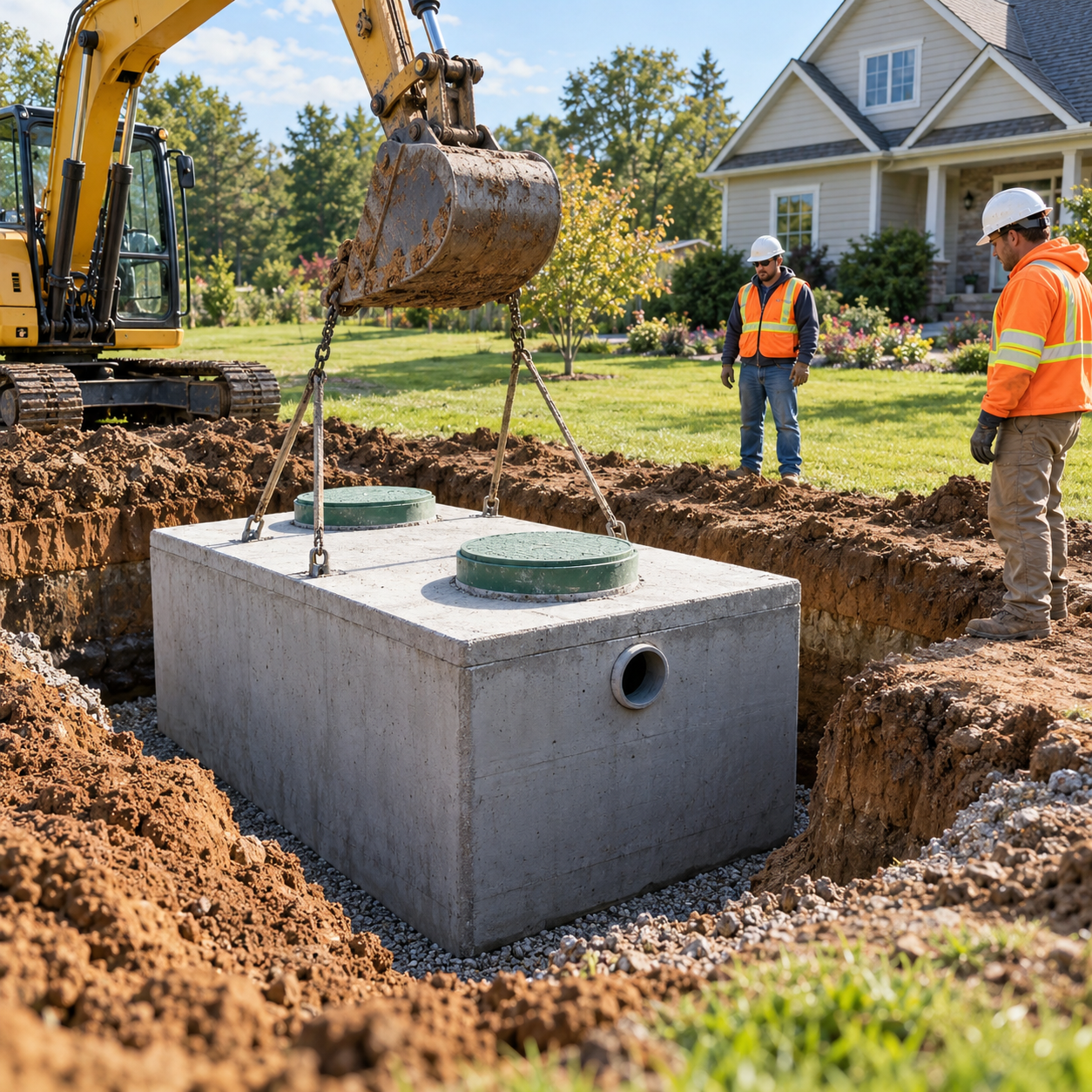
Replacing a failing septic tank or an entire septic system can cost a few thousand dollars for a straightforward conventional installation—or tens of thousands when the drainfield, soil conditions, pumps, engineering, or local rules make the project more complex. The most important first step is to determine exactly what has failed: the tank, a pipe, the distribution box, the drainfield, or the complete system.
For many U.S. homes, a conventional septic system replacement costs about $3,500 to $8,500. Alternative systems commonly cost $4,000 to $15,000, while engineered systems may cost $15,000 to $50,000 or more. Your actual price depends heavily on site conditions and local health-department requirements.
Average Septic Tank Replacement Cost
| Project or system type | Typical cost range |
|---|---|
| Conventional septic system | $3,500–$8,500 |
| Alternative septic system | $4,000–$15,000 |
| Engineered septic system | $15,000–$50,000+ |
| Replacement drainfield | $3,000–$15,000 |
| 1,000-gallon tank only | $1,000–$1,500 before installation |
| Permits, inspections, and testing | $1,000–$2,000 |
These figures are planning ranges, not fixed prices. A contractor’s proposal should identify whether it covers only the tank or the full working system, including excavation, piping, distribution components, drainfield work, permits, inspections, removal or abandonment of old components, and yard restoration.
Tank Replacement Versus Full System Replacement
Homeowners often use “septic tank replacement” to describe several different projects. That can make two estimates look dramatically different even when both contractors are pricing reasonable scopes.
Tank-only replacement
A tank-only project may be appropriate when the tank is cracked, deteriorated, undersized, or otherwise defective but the drainfield and connecting pipes remain serviceable. The quote should state the tank capacity and material, how the old tank will be removed or abandoned, and whether new inlet and outlet connections are included.
Tank and drainfield replacement
If the drainfield is saturated, clogged, damaged, or no longer meets local standards, replacing only the tank will not solve the underlying problem. A new field may require soil evaluation, redesigned trenches or chambers, additional piping, a distribution box, and restoration of a much larger area.
Complete engineered system
Properties with poor soil, a high water table, limited usable land, steep slopes, or strict environmental requirements may need a mound, aerobic treatment unit, pressure-dosed field, sand filter, or another engineered design. These systems cost more because they require professional design, specialized equipment, electrical components, and additional inspections or maintenance.
What Affects Septic System Replacement Cost?
1. System type
A gravity-fed conventional system is usually less expensive than an alternative or engineered system. The local authority may determine which designs are allowed after reviewing the soil, groundwater, lot size, setbacks, and expected wastewater flow.
2. Tank capacity
Tank size is commonly based on the number of bedrooms and local code requirements. A larger household or higher design flow may require a larger tank, increasing material, delivery, excavation, and installation costs.
3. Soil and percolation conditions
Soil must accept and treat wastewater at an appropriate rate. Dense clay, very sandy soil, shallow bedrock, seasonal groundwater, or failed percolation tests can require a more complex design and a larger budget.
4. Drainfield scope
The tank may represent only part of the total project. A replacement drainfield can add approximately $3,000 to $15,000, depending on its size, design, excavation needs, and the amount of usable land available.
5. Access and excavation
Restricted equipment access, deep tanks, mature landscaping, retaining walls, paved areas, rock, or steep grades can increase labor and equipment time. Ask whether the price includes removal of excess soil and restoration of disturbed areas.
6. Permits, design, testing, and inspections
Local approvals may require a site evaluation, soil or percolation testing, engineered plans, installation permits, abandonment permits, and final inspections. HomeGuide reports a combined planning range of about $1,000 to $2,000 for permits, inspections, and necessary testing, although local charges can differ substantially.
7. Old-system removal or abandonment
The existing tank may need to be pumped, crushed, removed, or filled according to local rules. The estimate should clearly state the approved method and its cost.
8. Yard restoration
Seeding, sod, grading, irrigation repair, driveway work, fence removal, and replacement landscaping may be excluded. These items can add meaningful cost after the septic contractor finishes.
Repair or Replace?
Not every septic problem requires a complete replacement. A broken baffle, clogged filter, damaged pipe, failed pump, or defective distribution box may be repairable. However, sewage surfacing in the yard, repeated backups, a structurally unsound tank, or a failed drainfield can indicate a larger problem.
Before approving replacement, ask for a written diagnosis identifying the failed component and the evidence supporting the recommendation. Depending on local practice, that may include tank inspection, pumping records, camera inspection, hydraulic testing, soil evaluation, or health-department findings.
Do not enter a septic tank or lean into an open tank. Septic tanks are confined spaces that may contain toxic gases and present collapse and fall hazards; inspection and pumping should be handled by qualified professionals.
How to Compare Septic Replacement Quotes
Get at least three written estimates when time and site conditions allow. Compare the scope line by line rather than choosing only by the total price. Our contractor hiring checklist can help you verify credentials, insurance, references, and contract terms.
Each proposal should identify:
- The diagnosed failure and recommended remedy
- System type, design, capacity, and major components
- Tank material and manufacturer
- Drainfield size and construction method
- Excavation, hauling, pumping, and disposal work
- Soil testing, engineering, permits, and inspections
- Electrical work, alarms, pumps, or control panels
- Old-system removal or approved abandonment
- Final grading and site restoration
- Work specifically excluded from the price
- Allowances and conditions that may trigger change orders
- Equipment, workmanship, and manufacturer warranties
- Payment schedule and estimated completion time
If a proposal includes separate supervision, overhead, or markup charges, review our guide to general contractor fees before comparing the totals.
Questions to Ask the Septic Contractor
- Which component has failed, and how did you confirm it?
- Can the tank or drainfield be repaired safely and legally?
- Is this quote for the tank only or the complete operating system?
- What system type and capacity are you proposing, and why?
- Who will perform the soil testing and system design?
- Are all permits, inspections, and engineering fees included?
- What happens if rock, groundwater, or unsuitable soil is discovered?
- How will the old tank and drainfield be abandoned or removed?
- Is pumping and waste disposal included?
- What yard, driveway, irrigation, or landscaping repairs are excluded?
- What maintenance will the new system require?
- What warranties apply to labor, the tank, pumps, and controls?
Warning Signs That Need Prompt Attention
Contact a septic professional if you notice sewage backing up indoors, persistent slow drains, gurgling plumbing, sewage odors, unusually wet or bright-green areas over the tank or drainfield, or wastewater surfacing in the yard. Avoid the affected area and keep children and pets away from exposed sewage.
Some symptoms can also result from a blocked house sewer or plumbing problem. A proper diagnosis prevents paying for a full septic replacement when a narrower repair would solve the issue. For a comparison of off-property sewer work, see our sewer line replacement cost guide.
How to Reduce Future Septic Costs
The U.S. Environmental Protection Agency recommends having a typical septic system inspected every one to three years and the tank pumped every three to five years, with frequency adjusted for tank size, household occupancy, water use, and accumulated solids. Maintenance records can also help a contractor understand the system’s history.
Protect the system by conserving water, keeping vehicles and heavy equipment off the tank and drainfield, directing roof and surface drainage away from the field, and avoiding grease, chemicals, wipes, and other unsuitable materials down household drains. More complex alternative systems may require more frequent professional service.
Bottom Line
A conventional septic system replacement commonly costs $3,500 to $8,500, but difficult sites and engineered designs can raise the total to $15,000 to $50,000 or more. The best comparison starts with a confirmed diagnosis and identical written scopes. Make sure each quote clearly separates the tank, drainfield, site work, permits, engineering, disposal, and restoration so that a low initial number does not become an expensive final bill.
Sources
- HomeGuide — How Much Does a Septic Tank System Cost?
- U.S. Environmental Protection Agency — How Septic Systems Work
- U.S. Environmental Protection Agency — Why Maintain Your Septic System
- U.S. Environmental Protection Agency — How to Care for Your Septic System
Editorial Note
Cost figures are national planning ranges based on the cited sources and may not reflect current prices, soil conditions, permit requirements, or contractor availability in a particular location. Obtain a site-specific diagnosis, confirm local health-department requirements, and compare detailed written estimates before approving work.