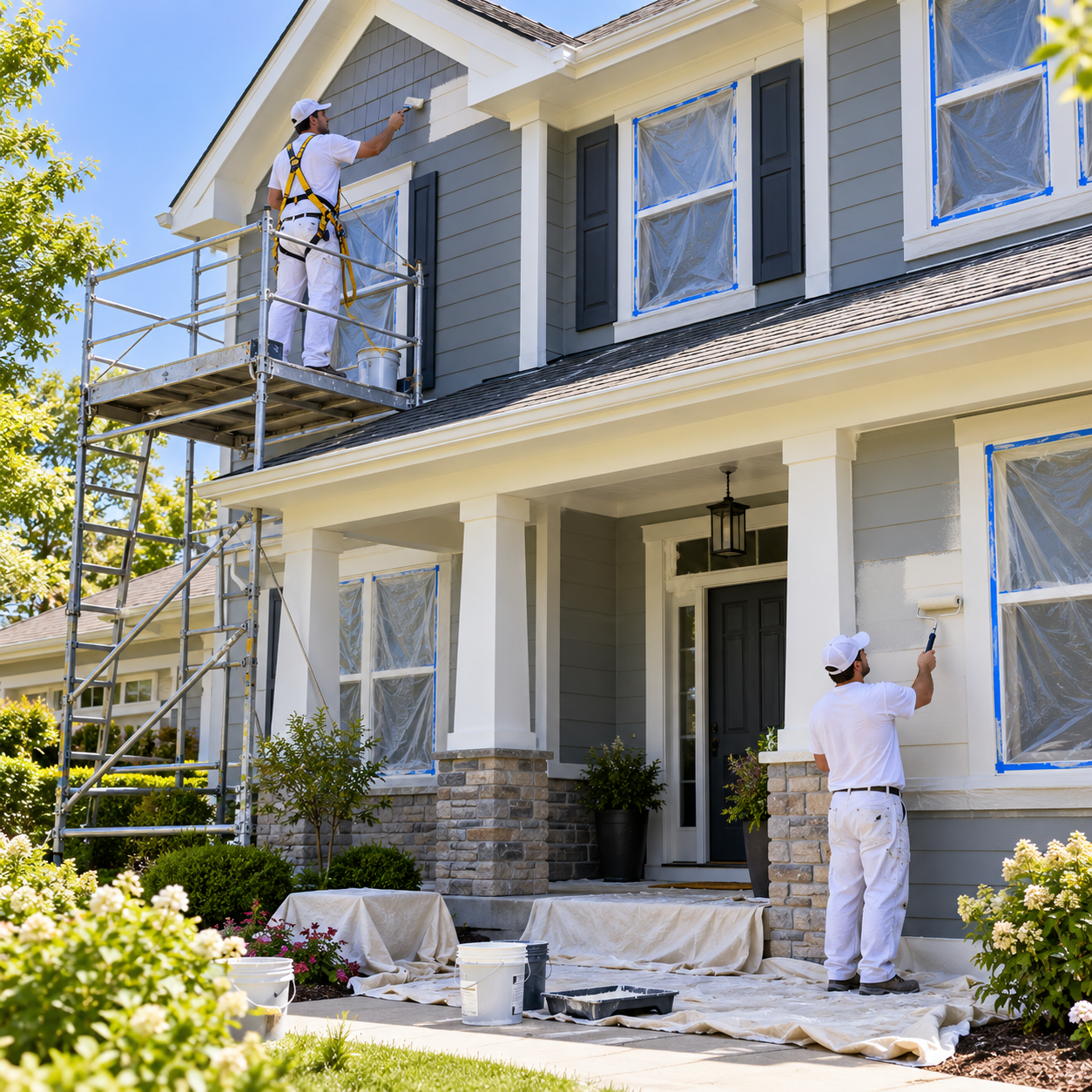
Professional exterior house painting typically costs $1.50 to $5.00 per square foot, or about $3,000 to $10,000 for an average 2,000-square-foot home. The final price depends on paintable wall area, number of stories, siding material, surface condition, preparation, repairs, paint quality, color change, access, and local labor rates.
Two estimates can differ substantially because one contractor may include washing, scraping, repairs, primer, caulking, two finish coats, trim, doors, and cleanup, while another includes only limited preparation and one coat. Compare the written scope—not just the total price.
Average Cost to Paint a House Exterior
| Home size | Approximate paintable area | Typical total cost |
|---|---|---|
| 1,000 square feet | 800 square feet | $1,200–$4,000 |
| 1,500 square feet | 1,200 square feet | $1,800–$6,000 |
| 2,000 square feet | 1,700 square feet | $2,600–$8,500 |
| 2,500 square feet | 2,100 square feet | $3,200–$10,500 |
| 3,000 square feet | 2,500 square feet | $3,800–$12,500 |
| 4,000 square feet | 3,350 square feet | $5,000–$16,800 |
These are national planning ranges that include labor and materials. A home’s floor area is not the same as its paintable exterior area. Roof shape, wall height, windows, doors, porches, additions, gables, and architectural details all change the actual measurement.
Exterior Painting Cost by Siding Material
| Exterior surface | Typical cost per square foot |
|---|---|
| Wood siding | $1.50–$5.00 |
| Vinyl siding | $1.50–$4.50 |
| Aluminum siding | $2.00–$4.50 |
| Stucco | $2.00–$5.00 |
| Brick | $2.50–$5.00 |
The price for each material depends heavily on surface preparation. Sound, previously painted siding may need cleaning and minor patching, while peeling wood, chalky aluminum, cracked stucco, or previously coated masonry can require extensive preparation and specialized primers.
Wood siding
Painting wood siding commonly costs $1.50 to $5.00 per square foot. The contractor may need to wash, scrape, sand, feather rough paint edges, replace rotten boards, reset nails, fill defects, prime bare wood, and caulk appropriate joints before applying finish coats.
Ask how the contractor will distinguish cosmetic paint failure from moisture problems. Painting over damp or decayed wood may hide the condition temporarily but will not correct the underlying cause.
Vinyl siding
Painting vinyl siding typically costs $1.50 to $4.50 per square foot. The surface must be thoroughly cleaned, and the coating must be compatible with vinyl. Very dark colors can absorb more heat and may contribute to distortion on some products, so confirm the paint manufacturer’s guidance and the siding warranty before changing colors.
Aluminum siding
Aluminum siding generally costs $2.00 to $4.50 per square foot to paint. Preparation may include removing chalky residue, treating corrosion, repairing dents, priming bare metal, and applying a compatible exterior coating.
Stucco
Stucco painting commonly costs $2.00 to $5.00 per square foot. Hairline cracks, larger movement cracks, staining, efflorescence, moisture intrusion, and patch texture may need attention before painting. The contractor should identify the proposed coating and explain whether it is appropriate for the wall’s vapor and moisture conditions.
Brick and masonry
Painting brick typically costs $2.50 to $5.00 per square foot. Brick must be clean, dry, sound, and suitable for coating. Existing moisture problems, deteriorated mortar, efflorescence, or prior coatings can complicate the job. Painting brick is difficult to reverse, so homeowners may also compare breathable limewash or other masonry-specific finishes.
What Affects Exterior House Painting Cost?
1. Paintable surface area
Contractors may price by measured wall area, crew labor, estimated production time, or a complete project total. Ask how the estimate was calculated and whether gables, dormers, foundations, porch ceilings, soffits, fascia, trim, doors, shutters, and detached structures are included.
2. Number of stories and access
Multi-story homes require more ladder work, scaffolding, lifts, fall protection, setup, and movement around the property. Steep ground, narrow side yards, landscaping, fences, overhead lines, and limited equipment access can also increase labor.
3. Surface preparation
Preparation is often the largest variable between bids. The scope may include:
- Pressure washing or low-pressure cleaning
- Mildew treatment
- Scraping loose paint
- Sanding and feathering edges
- Caulking selected joints and gaps
- Patching holes and cracks
- Repairing stucco or masonry
- Replacing damaged siding or trim
- Spot priming bare or stained areas
- Full priming for major color or material changes
A vague line such as “prepare as needed” does not explain the intended standard. Ask the contractor to identify the preparation steps and repair allowances in writing.
4. Existing paint condition
Faded but well-adhered paint generally costs less to repaint than a surface with widespread peeling, blistering, cracking, chalking, rot, or corrosion. Deterioration may also signal leaks, poor flashing, inadequate ventilation, failed caulk, or water entry that should be corrected first.
5. Number of coats
One finish coat may be adequate only when the surface is properly prepared, the new color is similar, and the coating manufacturer allows it. Significant color changes, porous surfaces, repairs, bare areas, and lower-hiding colors may require primer and two finish coats.
The estimate should distinguish primer from paint and state the planned number of coats or the performance standard used to determine coverage.
6. Paint quality and product specification
HomeGuide reports standard paint prices of roughly $20 to $80 per gallon, with premium products sometimes exceeding $100 per gallon. Product cost matters, but correct preparation, compatibility, application thickness, and weather conditions are equally important.
Ask for the manufacturer, product line, sheen, color, primer, and estimated quantity—not simply “premium exterior paint.”
7. Trim and architectural details
Windows, doors, shutters, columns, railings, decorative brackets, soffits, fascia, eaves, and detailed trim require cutting-in, masking, smaller tools, and additional setup. HomeGuide reports exterior trim painting at approximately $1 to $4 per linear foot.
8. Color change
Changing from a dark color to a light color—or from a strong color to another strong color—may require primer or additional coats. Multiple body and trim colors also increase masking, sequencing, and cleanup time.
9. Weather and scheduling
Temperature, humidity, wind, rain, dew, and direct sun affect application and curing. Contractors should follow the coating manufacturer’s limits and allow adequate drying time. Weather delays should be addressed in the contract without encouraging work under unsuitable conditions.
Lead Paint and Pre-1978 Homes
Exterior preparation can create paint chips and dust. The U.S. Environmental Protection Agency states that paid contractors disturbing painted surfaces in most pre-1978 homes must comply with the Renovation, Repair and Painting Rule, including firm certification and lead-safe work practices, unless an applicable exemption exists.
If the home was built before 1978, ask whether the contractor is properly certified, how painted debris will be contained, and how soil, landscaping, windows, doors, porches, and neighboring areas will be protected. Do not accept uncontrolled dry scraping, sanding, or debris disposal around an older home.
Lead-safe requirements can increase labor and containment costs, but they protect occupants, workers, and the property from hazardous dust and chips.
Repair or Repaint?
Paint is a protective finish, not a repair for failed building materials. Before painting, address active leaks, rotten wood, loose siding, damaged flashing, open joints, severe stucco cracks, failed masonry, or persistent moisture.
Minor defects can often be handled within the painting project if the scope clearly identifies the work. Larger siding deterioration may require a separate contractor. If replacement is being considered, our siding replacement cost guide explains material, removal, flashing, insulation, and hidden-damage factors.
Roof-edge leaks, damaged fascia, or defective gutters can also cause paint failure. Coordinate necessary repairs before final preparation and coating.
What a Complete Exterior Painting Quote Should Include
Each written proposal should identify:
- Measured or estimated paintable area
- Body, trim, doors, shutters, porches, foundations, and other included surfaces
- Washing and mildew-treatment method
- Scraping, sanding, and preparation standard
- Caulking locations and product type
- Repair work and repair allowances
- Primer manufacturer, product, and application areas
- Paint manufacturer, product line, sheen, and colors
- Number of primer and finish coats
- Spray, brush, and roller application methods
- Protection for roofing, windows, fixtures, paving, landscaping, and neighboring property
- Lead-safe procedures for applicable pre-1978 homes
- Scaffolding, lifts, and access equipment
- Cleanup and disposal responsibilities
- Start date, expected duration, and weather-delay terms
- Labor and material warranties
- Exclusions and change-order procedures
- Payment schedule and final inspection process
Compare at least three detailed estimates when practical. Our contractor hiring checklist can help you review insurance, references, contract terms, payment schedules, and warranties.
If overhead, supervision, or markup appears separately, review our guide to general contractor fees before comparing final totals.
Questions to Ask an Exterior Painter
- How did you calculate the paintable area and project price?
- Which surfaces and architectural features are included?
- What exact cleaning and preparation will you perform?
- How will rotten wood, cracks, loose siding, or damaged caulk be handled?
- Which primer and paint products will you use?
- How many coats are included?
- Will you spray, brush, roll, or use a combination?
- How will you protect windows, roofing, landscaping, paving, and fixtures?
- Is this a pre-1978 home, and do lead-safe requirements apply?
- Who will supervise the crew?
- What happens if weather interrupts the project?
- What labor and material warranties are included?
- What conditions could result in a change order?
- When is final payment due?
How to Compare Exterior Painting Bids
Create a simple comparison using the same categories for every contractor: preparation, repairs, primer, paint product, coats, trim, doors, access equipment, containment, cleanup, warranty, and exclusions. A low bid may omit extensive preparation or assume fewer coats; a higher bid may include repairs and detailed protection.
Ask contractors to price optional items separately when possible. Separate prices for shutters, doors, porch ceilings, railings, detached garages, fences, or decks make it easier to adjust the scope without losing clarity.
Avoid selecting a proposal solely because it promises “one-coat coverage.” Actual coverage depends on surface porosity, texture, existing color, new color, application rate, and product requirements.
How Long Does Exterior Paint Last?
Exterior paint commonly lasts about 5 to 10 years, although the actual interval varies widely by siding, climate, sun exposure, moisture, preparation quality, paint product, and workmanship. Wood and stucco may require more frequent attention, while properly prepared fiber-cement or other stable surfaces can sometimes go longer.
Inspect the exterior annually for peeling, open joints, mildew, chalking, failed caulk, exposed wood, rust, and moisture staining. Correcting small problems early can extend coating life and reduce future preparation costs.
Bottom Line
The cost to paint a house exterior commonly ranges from $1.50 to $5.00 per square foot, or roughly $3,000 to $10,000 for an average 2,000-square-foot home. Size matters, but surface condition, preparation, repairs, number of coats, access, and product specification often create the largest differences between quotes.
The best proposal clearly defines what will be cleaned, scraped, repaired, primed, painted, protected, and excluded. Confirm lead-safe requirements for pre-1978 homes, compare identical scopes, and avoid paying the final balance until the work has been inspected and agreed touch-ups are complete.
Sources
- HomeGuide — How Much Does It Cost to Paint a House Exterior?
- U.S. Environmental Protection Agency — Lead Renovation, Repair and Painting Program
- U.S. Environmental Protection Agency — Reduce the Risk of Lead Exposure at Home
Editorial Note
Cost figures are national planning ranges based on the cited sources and may not reflect local labor rates, surface condition, material prices, access, lead-safe requirements, weather, or contractor availability. Obtain a site-specific inspection and compare detailed written estimates before authorizing work.