Basement waterproofing costs $6,000 to $18,000 on average for a comprehensive professional system. Interior waterproofing commonly costs $6,000 to $12,000, while exterior waterproofing typically costs $10,000 to $18,000 because it requires excavation around the foundation.
Smaller repairs may cost only a few hundred dollars, but installing perimeter drainage, a sump pump, wall membranes or repairing structural cracks can raise the total substantially. The right solution depends on where the water originates—not simply where it becomes visible.
This guide explains realistic 2026 price ranges, the difference between interior and exterior systems, major quote factors and the questions homeowners should ask before hiring a basement waterproofing contractor.
Average Basement Waterproofing Cost
| Project | Typical cost |
|---|---|
| Complete basement waterproofing system | $6,000–$18,000 |
| Interior waterproofing | $6,000–$12,000 |
| Exterior waterproofing | $10,000–$18,000 |
| Sump pump installation | $600–$2,500+ |
| Interior French drain | $4,000–$17,000 |
| Basement wall crack repair | $250–$800+ per crack |
| Permanent basement dehumidifier | $1,000–$3,000 |
These figures are planning ranges, not contractor bids. Prices vary by basement size, foundation type, access, soil conditions, water pressure, local labor rates and the combination of methods required.
Interior vs. Exterior Basement Waterproofing
The largest pricing difference usually comes from whether the contractor manages water from inside the basement or prevents it from reaching the foundation wall from outside.
Interior waterproofing
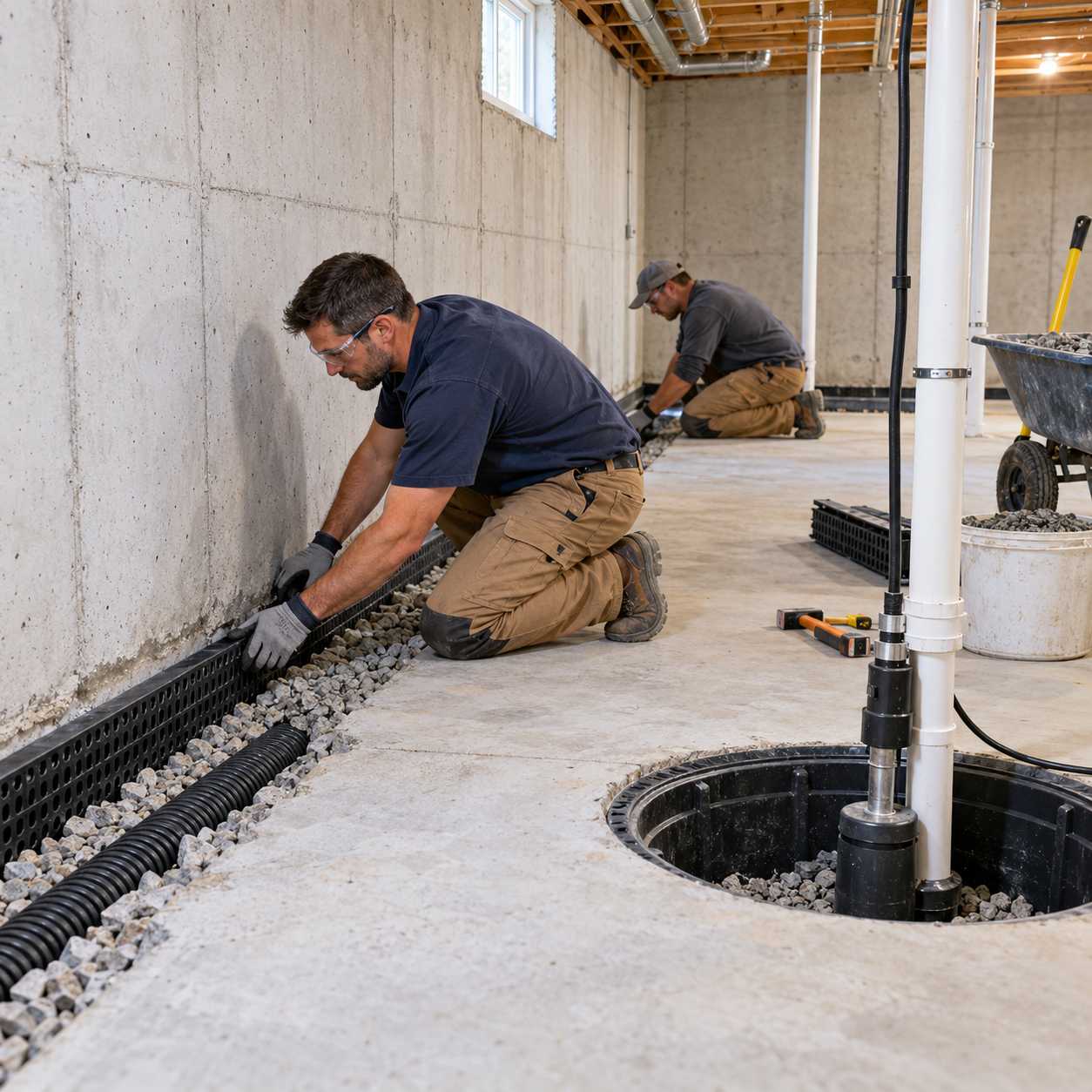
Interior systems collect or control water after it reaches the foundation. A contractor may cut a channel around the basement floor perimeter, install drain tile, direct water to a sump basin and seal accessible cracks.
Interior waterproofing commonly costs $6,000 to $12,000. It is often practical when exterior excavation is difficult because of decks, driveways, porches, utilities or neighboring properties.
An interior system can manage water effectively, but homeowners should understand that drainage and a sump pump do not necessarily stop water from contacting the exterior foundation wall.
Exterior waterproofing
Exterior waterproofing normally involves excavating beside the foundation, cleaning and repairing the wall, applying a waterproof membrane, installing or replacing footing drains and backfilling with suitable material.
This approach typically costs $10,000 to $18,000. Difficult access, deep foundations, landscaping restoration and excavation around utilities can increase the price.
Exterior work addresses water before it enters the basement, but it is more disruptive and labor-intensive. A detailed proposal should state exactly how much of the foundation will be exposed and treated.
Basement Waterproofing Cost by Method
Most serious moisture problems require more than one measure. A complete proposal may combine surface drainage corrections, crack repairs, drains, membranes and pumping equipment.
Sump pump installation
A professionally installed sump pump generally costs $600 to $2,500 or more. The price depends on whether a basin already exists, the pump capacity, discharge routing, electrical work and whether a battery backup is included.
The quote should identify the pump model, horsepower or capacity, check valve, discharge location, backup arrangement and warranty. A low bid may exclude electrical work or exterior discharge piping.
Interior French drain or perimeter drain
An interior basement French drain commonly costs $4,000 to $17,000. The contractor typically removes a strip of concrete near the walls, installs perforated drainage pipe and stone, connects it to a sump basin and replaces the concrete.
Cost is affected by basement perimeter, slab thickness, finished walls, obstacles and the number of sump pumps required.
Exterior drainage and membrane
Exterior waterproofing may include excavation, wall repairs, waterproof coating or membrane, drainage board, footing drain, stone, filter fabric and final grading. The proposal should distinguish a true waterproof membrane from basic damp-proof coating.
Ask who is responsible for removing and restoring patios, steps, decks, plants, fences and paved areas. Restoration exclusions can materially change the final project cost.
Crack injection and wall repair
Repairing a basement wall crack may cost $250 to $800 or more per crack, depending on its width, accessibility and whether polyurethane or epoxy injection is suitable.
A crack that is widening, horizontal, displaced or associated with a bowed wall may indicate structural movement. Waterproofing alone may not correct the underlying problem. Review our foundation repair cost guide when structural repair may be involved.
Grading, gutters and downspouts
Some wet-basement problems begin with roof runoff or soil sloping toward the house. Extending downspouts, cleaning gutters and correcting the ground slope may reduce water around the foundation.
The U.S. Environmental Protection Agency recommends directing surface water away from the foundation and correcting moisture sources before finishing basement space. These relatively simple measures may be part of the solution, but they will not correct every groundwater or hydrostatic-pressure problem.
Dehumidification
A dehumidifier helps control humid air and condensation, but it does not replace drainage or leak repair when liquid water is entering the basement. A permanently installed basement dehumidifier may cost $1,000 to $3,000, including a drain connection.
What Affects Basement Waterproofing Cost?
1. Source and severity of the water
Condensation, plumbing leaks, surface runoff, wall cracks, failed footing drains and groundwater pressure require different solutions. A contractor should diagnose the source rather than recommend the same system for every basement.
2. Basement size and perimeter
Drainage systems are often priced according to the number of linear feet treated. Irregular layouts, multiple rooms and interior partitions can add demolition and restoration work.
3. Foundation depth and material
Deep basements require more excavation. Poured concrete, concrete block, brick and stone foundations may require different preparation, crack repair and membrane details.
4. Interior finishes
Finished walls, flooring, cabinets and utilities may need to be removed before interior drainage work. Confirm whether demolition, debris removal and reconstruction are included.
5. Exterior access
Limited space for excavation equipment can increase labor. Air-conditioning units, gas lines, water lines, sewer pipes, porches and neighboring structures may restrict access.
6. Drainage destination
Water collected by a drain or sump pump needs a legal and effective discharge point. Long piping runs, freeze protection, dry wells or municipal restrictions may increase costs. Never assume discharge into a sanitary sewer is permitted.
7. Structural or mold-related work
Foundation stabilization, major crack repair and mold remediation are usually separate from basic waterproofing. Ask the contractor to identify these exclusions clearly.
8. Warranty terms
A long warranty has value only when its coverage is clear and the company remains available to honor it. Check whether the warranty covers materials, labor, pumps, clogs and water entry—and whether it transfers to a future owner.
Waterproofing or Water Management?
Contractors sometimes use “waterproofing” to describe very different scopes. One proposal may include an exterior membrane that resists water entry, while another may collect incoming water with an interior drain and pump it away.
Both approaches can be appropriate, but they should not be compared only by total price. Compare:
- The diagnosed source of moisture
- The walls or perimeter length being treated
- Whether the system prevents entry or manages water after entry
- Drain type, pipe size and discharge route
- Sump pump specifications and backup protection
- Crack and wall repairs
- Demolition and restoration
- Permits and inspections
- Warranty coverage and exclusions
Signs You May Need Basement Waterproofing
Warning signs include:
- Water entering after heavy rain
- Damp walls or floors
- White mineral deposits on masonry
- Peeling paint or damaged finishes
- Musty odors or visible mold
- Rust on appliances or metal supports
- Repeated sump pump operation
- Cracks that leak or appear to be changing
If active flooding is occurring near electrical equipment, avoid the area and contact qualified professionals. Waterproofing should follow a proper assessment of safety, drainage and structural conditions.
How to Compare Contractor Quotes
Ask each contractor to quote the same defined scope. A useful written proposal should include:
- The suspected source of water and inspection findings
- A drawing or description of the areas being treated
- Total drain length and system components
- Membrane, sealant and drainage materials
- Sump pump and backup specifications
- Excavation depth and backfill method
- Demolition, debris disposal and restoration
- Permit and inspection responsibility
- Start date, duration and payment schedule
- Warranty terms, exclusions and transferability
Our contractor hiring checklist can help you check licensing, insurance, references and contract terms before signing.
Questions to Ask a Basement Waterproofing Contractor
- What is the actual source of the moisture?
- What evidence supports the recommended method?
- Are lower-cost drainage or grading corrections appropriate first?
- How many linear feet of the basement will be treated?
- What happens if water later appears in an untreated area?
- Is the proposed membrane waterproofing or damp-proofing?
- Where will the collected water discharge?
- Is a battery-backup pump included?
- What interior and exterior restoration is excluded?
- Does the warranty cover labor, materials and pumps?
- Is the warranty transferable when the house is sold?
How to Avoid an Incomplete Quote
Before accepting a bid, verify that the following items are not left as vague allowances:
- Electrical outlet or dedicated circuit for the pump
- Backup pump or alarm
- Permit fees
- Concrete removal and replacement
- Finished-wall and flooring restoration
- Exterior landscaping and hardscape restoration
- Hauling and disposal
- Mold remediation
- Structural repairs
- Annual pump or drain maintenance
A quote that looks cheaper may simply transfer these costs to the homeowner.
Is Basement Waterproofing Worth It?
Waterproofing may be worthwhile when it addresses recurring water entry, protects mechanical equipment and stored belongings, or allows a basement renovation to proceed safely. EPA guidance says moisture problems should be corrected before a basement is converted into living space because damp conditions can encourage mold and other biological growth.
However, do not pay for a large system until the water source has been identified. In some homes, gutter repairs, longer downspouts or grading improvements may be an important first step. In others, groundwater pressure requires a properly designed drain-and-pump system or exterior work.
Bottom Line
Basement waterproofing costs $6,000 to $18,000 for many complete professional projects. Interior systems generally cost $6,000 to $12,000, while exterior systems often cost $10,000 to $18,000 because of excavation and restoration.
The best proposal is not automatically the least expensive one. It is the proposal that correctly identifies the source of water, clearly defines the system and materials, provides a workable discharge plan and states all restoration and warranty terms in writing.
Sources
- HomeGuide — Basement Waterproofing Cost: https://homeguide.com/costs/basement-waterproofing-cost
- HomeGuide — Basement Leak Repair Cost: https://homeguide.com/costs/basement-leak-repair-cost
- U.S. Environmental Protection Agency — Remodeling Your Home and Indoor Air Quality: https://www.epa.gov/indoor-air-quality-iaq/remodeling-your-home-and-indoor-air-quality
- U.S. Environmental Protection Agency — Moisture Control: https://www.epa.gov/mold/what-are-main-ways-control-moisture-your-home
- ENERGY STAR — Basement and Crawlspace Air Sealing and Insulating: https://www.energystar.gov/saveathome/seal_insulate/basement_crawlspace
Editorial Note
Cost ranges are national planning estimates and may change with location, site conditions, materials and contractor scope. Obtain several itemized local proposals and confirm permit, drainage and discharge requirements with the appropriate local authority.