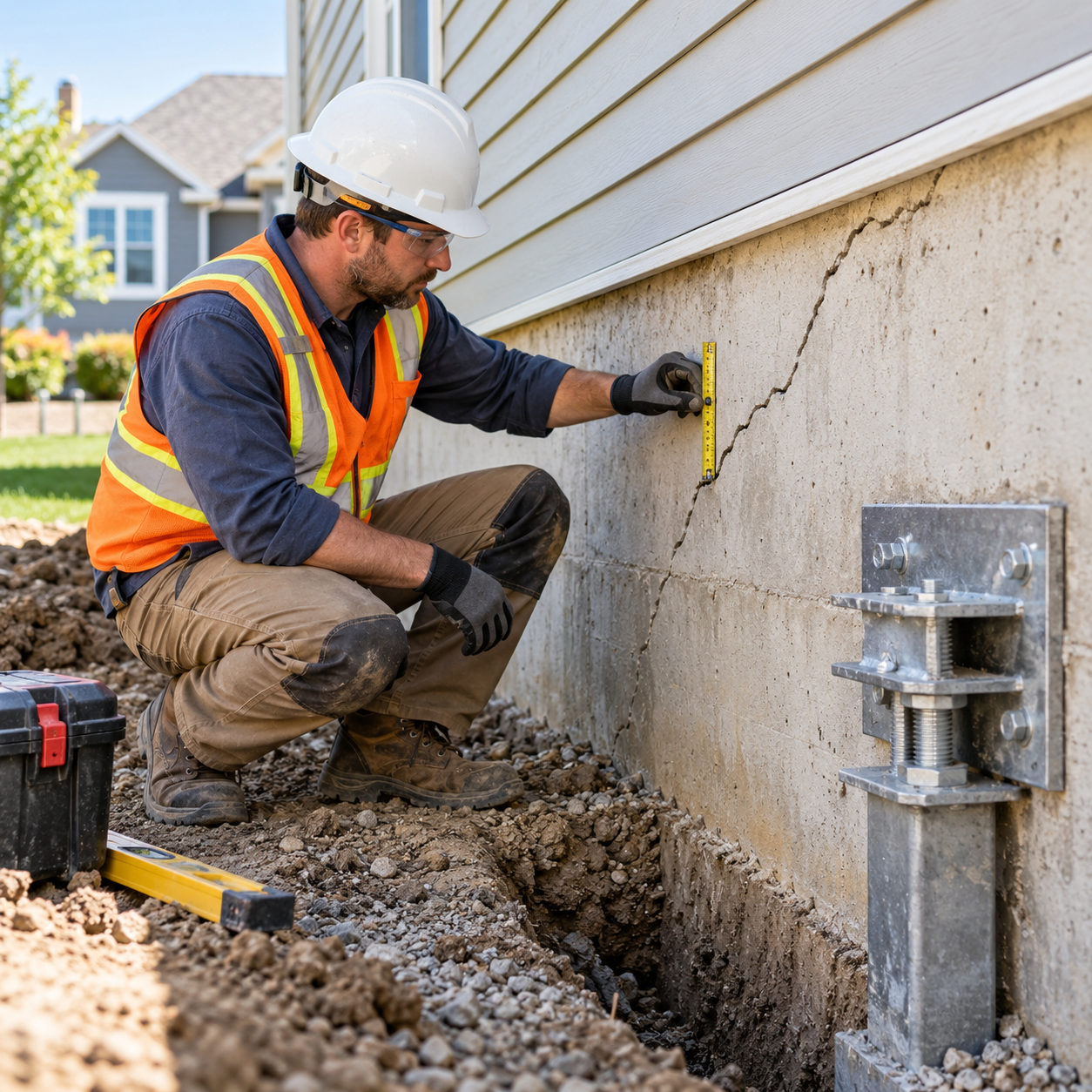
Foundation repair costs can range from a few hundred dollars for sealing a small, non-structural crack to tens of thousands of dollars for underpinning, wall stabilization, or extensive settlement repair. The price depends less on the visible crack itself than on why it formed, whether movement is continuing, and which part of the foundation must be stabilized.
This guide explains realistic 2026 foundation repair costs, common repair methods, structural-engineer fees, and the questions homeowners should ask before accepting a contractor’s proposal.
Quick cost summary: Minor non-structural crack repairs commonly cost about $250 to $1,500. Many slab repairs fall between $1,000 and $10,000, while settlement repair, wall stabilization, or multi-pier underpinning can cost $8,000 to $30,000 or more. These are planning ranges—not substitutes for an on-site diagnosis.
1. Average Foundation Repair Cost in 2026
The following ranges provide a starting point for budgeting. Actual prices vary by location, foundation design, access, soil conditions, engineering requirements, permits, and the extent of movement.
| Repair category | Typical planning range |
|---|---|
| Minor non-structural crack repair | $250–$1,500 |
| Basement wall crack repair | $250–$800+ per crack |
| Concrete slab foundation repair | $1,000–$10,000 |
| Structural slab-crack repair | $2,000–$12,000+ |
| Settlement or sinking-foundation repair | $4,500–$20,000+ |
| Bowing-wall stabilization | $5,000–$15,000+ |
| Multi-pier underpinning | $8,000–$30,000+ |
| Pier-and-beam foundation repair | $2,000–$15,000+ |
| Extensive reconstruction or foundation replacement | $20,000–$100,000+ |
The lowest quote is not necessarily the best value. One contractor may quote only crack sealing, while another may include excavation, drainage correction, structural stabilization, permits, engineering, and restoration. Compare the scope and diagnosis, not just the total.
2. What Determines Foundation Repair Cost?
The main cost factors are:
- Cause of movement: Settlement, expansive soil, poor drainage, plumbing leaks, erosion, frost movement, or inadequate original construction can require different solutions.
- Severity and activity: A stable hairline crack is different from an expanding crack accompanied by floor slope or wall displacement.
- Foundation type: Slab-on-grade, basement, crawlspace, pier-and-beam, and block foundations require different access and repair methods.
- Repair method: Epoxy injection, polyurethane sealing, carbon-fiber reinforcement, wall anchors, slab lifting, push piers, and helical piers have very different costs.
- Number and depth of piers: Deeper competent soil, limited equipment access, and more stabilization points increase labor and material costs.
- Excavation and access: Finished basements, patios, landscaping, porches, flooring, utilities, and narrow side yards may complicate the work.
- Engineering and permits: Structural plans, elevation surveys, soil testing, inspections, and permits may be required.
- Related repairs: Plumbing, drainage, waterproofing, drywall, flooring, masonry, doors, windows, and landscaping may not be included in the foundation bid.
3. Foundation Crack Repair Cost
Minor, non-structural cracks may cost about $250 to $1,500 to repair, depending on crack length, location, access, and whether epoxy or polyurethane injection is used. A basement-wall crack repair may fall near $250 to $800 or more per crack when the problem is limited and no structural movement is present.
Crack width alone does not establish the diagnosis. Direction, displacement, location, water entry, previous repairs, and whether the crack is changing all matter. Stair-step masonry cracks, horizontal foundation-wall cracks, displaced concrete, or cracks accompanied by sloping floors and sticking doors deserve professional evaluation.
Sealing a crack can control water entry, but it does not stabilize soil or correct continuing settlement. Ask the contractor to state whether the proposed work is:
- cosmetic sealing,
- waterproofing,
- structural repair, or
- a combination of these.
4. Slab Foundation Repair Cost
Many concrete slab repairs cost approximately $1,000 to $10,000, but structural crack repair may reach $2,000 to $12,000 or more. If the slab has settled significantly and requires multiple piers, the total can rise to $8,000 to $30,000 or more.
Common slab repair approaches include:
- epoxy or polyurethane crack injection,
- slab lifting with grout or structural foam,
- localized concrete removal and replacement,
- push-pier or helical-pier underpinning,
- plumbing leak repair beneath the slab, and
- drainage or soil-moisture correction.
Slab lifting and piering solve different problems. Lifting may fill voids and improve elevation in selected conditions; piers transfer structural loads to deeper, more reliable bearing material. A quote should explain why the proposed method fits the observed failure mechanism.
5. Pier-and-Beam Foundation Repair Cost
Pier-and-beam foundation repairs often cost $2,000 to $15,000 or more. Limited shimming or replacement of a few damaged components may cost less, while widespread deterioration, inadequate supports, moisture damage, or major leveling work can cost substantially more.
Possible scope items include:
- replacing deteriorated wood beams or joists,
- adding or replacing piers,
- correcting undersized or poorly spaced supports,
- leveling selected areas,
- repairing crawlspace moisture or drainage problems,
- treating rot or pest damage, and
- improving crawlspace access or ventilation.
HomeGuide reports that steel-pier replacement can cost roughly $1,000 to $1,600 per pier, while reinforcement of deteriorated or settled piers may cost approximately $1,500 to $3,000 per pier. Confirm exactly what the per-pier price includes.
6. Foundation Repair Cost per Pier
Contractors may quote push piers, helical piers, or other underpinning systems by the pier. A practical planning allowance is often $1,000 to $3,000 or more per installed pier, but the final price depends on:
- pier type and manufacturer,
- installation depth and torque or load requirements,
- interior versus exterior access,
- excavation and concrete removal,
- lifting or stabilization requirements,
- engineer-designed spacing,
- brackets and connection details,
- permit and inspection costs, and
- restoration after installation.
Do not compare two per-pier prices unless the proposals specify the same system, estimated depth, bracket, warranty, load verification, access work, and restoration. Also ask what happens if greater depth is required than the allowance in the quote.
7. Is Cost per Square Foot Useful?
Foundation repair cost per square foot is usually a weak comparison measure. Structural repairs are normally priced according to the damaged area, number of piers, linear feet of wall, access, or specific repair method—not the total floor area of the home.
Square-foot pricing is more useful for full slab replacement, crawlspace encapsulation, or broad waterproofing work. For settlement repair, request a plan showing the affected locations, elevation readings, repair points, and quantities instead.
8. Structural Engineer and Inspection Costs
For signs of significant movement or when contractor recommendations differ, an independent licensed structural engineer can help define the problem before you solicit repair bids. Depending on location and scope, a residential evaluation and written report may cost several hundred to more than $1,500; engineered drawings, monitoring, or soil investigation can increase the fee.
Ask whether the service includes:
- an interior and exterior inspection,
- floor-elevation measurements,
- crack mapping and photographs,
- review of drainage and plumbing indicators,
- a written conclusion about the likely cause,
- repair recommendations or drawings, and
- a return inspection after the work.
An engineer who is paid for professional evaluation rather than the repair sale can provide a useful independent basis for comparing proposals.
9. Drainage, Soil, and Plumbing Factors
Foundation movement may be connected to water and soil conditions. Expansive soils can shrink and swell as moisture changes, while erosion, poorly compacted fill, leaking pipes, and inadequate surface drainage can reduce support or create uneven movement.
The U.S. Environmental Protection Agency advises directing surface water away from the foundation. Gutters, downspouts, grading, drains, irrigation practices, and plumbing leaks should therefore be evaluated as part of the diagnosis—not treated as unrelated issues.
Possible additional costs include:
- gutter and downspout changes,
- regrading or drainage installation,
- exterior excavation and waterproofing,
- sewer or water-line repair,
- under-slab plumbing tests,
- sump-pump or drainage systems, and
- landscaping or hardscape restoration.
If a plumbing problem is suspected, compare that scope separately. Our guides to whole-house repiping costs and sewer-line replacement costs explain additional quote factors.
10. Foundation Waterproofing Is Not Always Structural Repair
Water intrusion and structural movement can occur together, but they are not the same problem. Crack injection, coatings, drain tile, sump pumps, exterior membranes, and grading may control water without stabilizing a moving foundation. Likewise, piers may stabilize settlement without correcting basement seepage.
Ask each contractor to separate these parts of the bid:
- structural stabilization,
- crack repair,
- water-management work,
- plumbing or drainage correction,
- cosmetic restoration, and
- monitoring or post-repair verification.
This separation makes competing proposals easier to compare and reduces the risk of assuming that one repair solves every symptom.
11. Does Homeowners Insurance Cover Foundation Repair?
Coverage depends on the policy and the event that caused the damage. Gradual settlement, soil movement, wear, faulty construction, and maintenance-related water problems are commonly excluded. Sudden damage from a covered event may be treated differently, subject to policy terms and exclusions.
Before authorizing non-emergency work:
- document cracks, movement, and water damage with dated photographs;
- review the policy and endorsements;
- contact the insurer promptly if a potentially covered event occurred;
- avoid making permanent changes before the insurer advises whether an inspection is required; and
- request written coverage decisions.
Do not rely on a contractor’s statement that insurance will or will not pay. The insurer and policy control that decision.
12. Warning Signs That Deserve Prompt Evaluation
Arrange professional evaluation when you notice one or more of the following:
- horizontal cracks in a foundation or basement wall,
- widening stair-step cracks in brick or block,
- visible wall bowing, leaning, or displacement,
- floors that slope noticeably or change over time,
- doors and windows sticking throughout one area,
- gaps between walls, ceilings, cabinets, or trim,
- a chimney or porch separating from the house,
- recurring cracks after previous repairs,
- persistent water intrusion near cracks, or
- sudden movement after a storm, plumbing leak, excavation, earthquake, or ground failure.
If there is sudden major movement, a collapsing wall, gas odor, damaged utilities, or another immediate hazard, leave the affected area and contact the appropriate emergency service or qualified professional.
13. How to Compare Foundation Repair Quotes
Obtain at least two or three detailed proposals after the problem has been adequately diagnosed. Each quote should identify:
- the observed conditions and likely cause,
- measurements or elevation data,
- the repair locations on a drawing,
- method and product specifications,
- number and estimated depth of piers,
- whether the goal is stabilization or lifting,
- engineering, permits, and inspections,
- excavation and access work,
- utility locating and plumbing precautions,
- cleanup and restoration,
- exclusions and unit prices for additional work,
- payment schedule,
- start time and estimated duration, and
- warranty terms and transfer conditions.
Our guides on how to hire a contractor and general contractor fees can help you evaluate credentials, payment terms, allowances, and exclusions.
14. Questions to Ask the Contractor
Use these questions during each estimate:
- What evidence identifies the cause of the movement?
- Is the foundation still moving, and how was that determined?
- Does the proposal stabilize the structure, lift it, seal cracks, control water, or do all four?
- Why is this repair method appropriate for my foundation and soil conditions?
- Who determined the pier locations and quantities?
- Is engineering required, and who is responsible for it?
- What permit and inspection requirements apply?
- What happens if a pier must be installed deeper than estimated?
- Could lifting damage plumbing, drywall, flooring, roofing, or masonry?
- Which repairs and restoration are excluded?
- How will performance be verified after completion?
- What does the warranty cover, exclude, and require from the homeowner?
15. Common Quote Red Flags
Be cautious when a proposal includes:
- an expensive structural repair based only on a brief visual visit,
- no measurements, drawing, or explanation of the cause,
- pressure to sign immediately for a large discount,
- a vague “lifetime warranty” without written exclusions,
- a large upfront payment inconsistent with local law or project needs,
- no permit or engineering discussion where either may be required,
- promises that all cracks or cosmetic damage will disappear,
- no price for extra pier depth or hidden conditions, or
- conflicting verbal promises that do not appear in the contract.
Foundation work can be disruptive and difficult to reverse. A clear diagnosis and detailed contract are worth more than a dramatic sales presentation or an unusually low bid.
16. Frequently Asked Questions
How much does foundation repair usually cost?
Minor crack repairs may cost a few hundred dollars, while many slab or pier-and-beam repairs cost several thousand dollars. Settlement repair or multi-pier underpinning frequently reaches five figures.
Is every foundation crack a structural problem?
No. Concrete can develop shrinkage cracks that are not structural. However, crack direction, displacement, water entry, surrounding symptoms, and change over time determine whether further evaluation is needed.
Can I repair a foundation crack myself?
A homeowner may be able to seal a confirmed non-structural crack, but sealing should not replace diagnosis when movement, displacement, water pressure, or structural symptoms are present.
Should I call a structural engineer or a foundation company first?
For significant movement, a major purchase decision, or conflicting contractor recommendations, an independent structural engineer is often a sensible first step. The resulting findings can give contractors a consistent scope to price.
Will foundation repair return the house to perfectly level?
Not necessarily. Some projects are designed to stabilize the structure and prevent further movement. Attempting a full lift can increase the risk of damage to finishes, masonry, and utilities. The contract should state the intended outcome.
How long does foundation repair take?
Limited crack work may take a day, while pier installation or wall stabilization may take several days or longer. Engineering, permits, utility locating, excavation, weather, and restoration can extend the overall schedule.
17. Homeowner Foundation Repair Checklist
Before signing a contract:
- Photograph and date visible damage.
- Note when symptoms began and whether they are changing.
- Check drainage, downspouts, irrigation, and known plumbing leaks.
- Obtain an independent evaluation when the problem is significant or disputed.
- Request a written scope and repair-location drawing.
- Compare equivalent methods, quantities, and exclusions.
- Verify contractor licensing and insurance where required.
- Confirm permits, engineering, and inspections.
- Understand whether the goal is sealing, stabilization, lifting, or waterproofing.
- Review extra-depth and hidden-condition pricing.
- Confirm cleanup and restoration responsibilities.
- Read warranty limitations and transfer rules.
- Keep the engineer’s report, permits, photographs, invoices, and final measurements.
Final Takeaway
Foundation repair cost depends on the underlying cause and the work required to control it. A small crack may need only a limited repair, while active settlement, bowing walls, or widespread support failure may require engineering and substantial structural work.
Before committing thousands of dollars, obtain a defensible diagnosis, compare written scopes, and make sure every proposal clearly separates structural repair, water management, plumbing, and restoration. The best decision is not simply the lowest price—it is the solution that addresses the verified problem with measurable work and clear responsibility.
Sources
- HomeGuide, “How Much Does Foundation Repair Cost? (2026)”
https://homeguide.com/costs/foundation-repair-cost - HomeGuide, “How Much Does Cracked Slab Foundation Repair Cost? (2026)”
https://homeguide.com/costs/cracked-slab-foundation-repair-cost - HomeGuide, “How Much Does Pier and Beam Foundation Repair Cost? (2026)”
https://homeguide.com/costs/pier-and-beam-foundation-repair-cost - U.S. Geological Survey, “Expansive Soils”
https://pubs.usgs.gov/pp/1240b/report.pdf - U.S. Environmental Protection Agency, “Addressing Indoor Environmental Concerns During Remodeling”
https://www.epa.gov/indoor-air-quality-iaq/addressing-indoor-environmental-concerns-during-remodeling - U.S. Environmental Protection Agency, “Moisture Control Guidance for Building Design, Construction and Maintenance”
https://www.epa.gov/indoor-air-quality-iaq/moisture-control-guidance-building-design-construction-and-maintenance-0
Editorial Note
Cost figures are planning ranges compiled from the cited national sources and should not be interpreted as a contractor quote. Local labor rates, soil conditions, engineering requirements, access, permits, and the verified repair scope can materially change the final price. Home Decision Compass provides independent educational information and does not diagnose structural conditions or replace advice from a licensed professional.