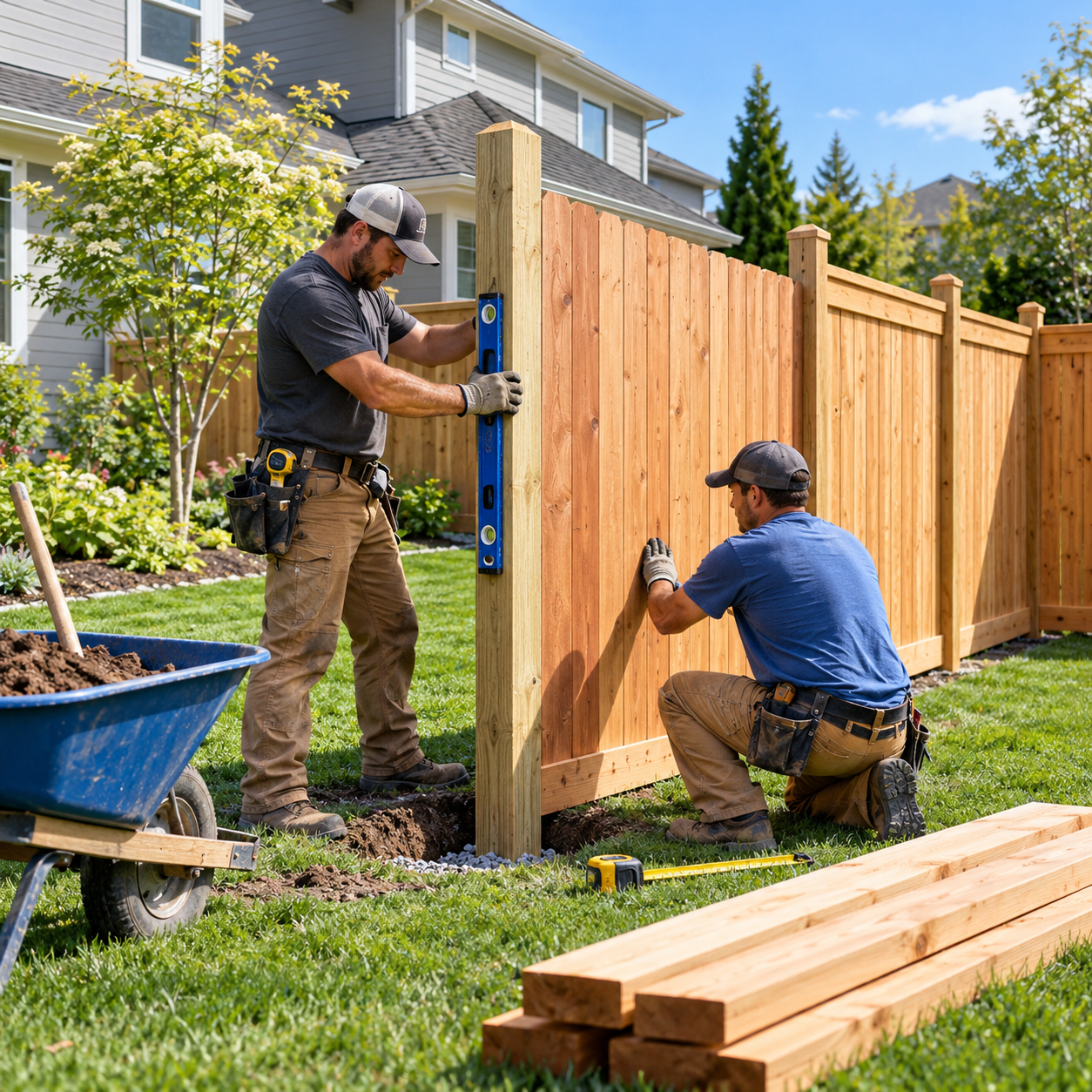
Installing a fence can improve privacy, security, curb appeal, pet safety and the practical use of a yard. However, the final price can vary widely because contractors are not always quoting the same material, fence height, post system, gate allowance or site preparation.
For many professionally installed residential fences, homeowners can expect to pay about $20 to $60 per linear foot. A typical 200-linear-foot project may therefore cost roughly $4,000 to $12,000. Fence replacement commonly costs more—about $30 to $80 per linear foot—because demolition, disposal and difficult post removal are added to the new installation.
These figures are planning ranges, not substitutes for local proposals. Material quality, property access, terrain, soil, wind exposure, permit requirements and labor rates can move a project well outside a national average.
Average Fence Installation Cost in 2026
| Project size | Typical installed cost* |
|---|---|
| 50 linear feet | $1,000–$3,000 |
| 100 linear feet | $2,000–$6,000 |
| 150 linear feet | $3,000–$9,000 |
| 200 linear feet | $4,000–$12,000 |
| 300 linear feet | $6,000–$18,000 |
*Based on a broad planning range of $20 to $60 per linear foot for common new residential fencing. Custom designs, premium materials, difficult terrain and extensive demolition can cost more.
The most useful way to compare quotes is not by total price alone. First confirm the exact measured length, then compare the installed cost per linear foot and separately identify gates, demolition, permits and other allowances.
Fence Cost by Material
Material choice affects the initial price, appearance, maintenance requirements and expected service life.
| Fence material | Typical installed cost per linear foot |
|---|---|
| Chain-link | $10–$40 |
| Wood | $20–$50 |
| Vinyl | $30–$60 |
| Composite | $20–$85 |
| Aluminum | $25–$75 |
| Steel or other metal | $20–$85 |
| Wrought iron | $50–$85 |
Wood fencing
Wood fencing commonly costs $20 to $50 per linear foot installed. Pine, spruce and basic cedar designs may be closer to the lower end, while premium lumber, decorative layouts, taller privacy fencing and difficult installation conditions increase the price.
Wood provides a natural appearance and can be repaired in sections. It also needs periodic staining, sealing or painting, and individual boards may warp, crack or rot over time.
Vinyl fencing
Vinyl fencing typically costs $30 to $60 per linear foot installed. It generally needs less routine maintenance than wood and is available in privacy, picket and decorative styles.
Ask about panel reinforcement, post-wall thickness, wind rating and the manufacturer’s warranty. A low quote may use lighter components or exclude reinforcement needed for the local conditions.
Chain-link fencing
Chain-link installation commonly costs $10 to $40 per linear foot. Fence height, wire gauge, mesh size, coating, terminal posts and the number of gates all affect the price.
Standard galvanized chain-link is usually economical and durable, while black or other vinyl-coated systems cost more. Privacy slats can improve screening but add cost and increase wind load.
Aluminum and ornamental metal fencing
Aluminum fencing commonly costs $25 to $75 per linear foot installed. It is frequently selected for decorative boundaries and pool enclosures because it resists rust and can provide an open appearance.
Premium aluminum, steel and wrought-iron systems can cost considerably more. Compare picket spacing, rail count, coating, panel strength, gate hardware and fastening details—not only the visual style.
Composite fencing
Composite fencing may cost $20 to $85 per linear foot installed. It is often chosen for privacy and reduced maintenance, but the installed price depends heavily on the product system, post structure, panel design and local availability.
Privacy Fence Cost
A 6-foot wood or vinyl privacy fence commonly costs about $25 to $60 per linear foot installed. An 8-foot fence may cost $50 to $85 per linear foot, where local rules permit that height.
Height changes more than the amount of material. Taller fences may need larger or more closely spaced posts, deeper footings, stronger rails and additional wind-load consideration. Before approving an 8-foot design, verify zoning limits, permit requirements and any neighborhood or homeowners-association restrictions.
New Fence Versus Fence Replacement Cost
A new fence on a clear site may fall within the general $20 to $60 per linear foot range. Replacing an existing fence commonly costs $30 to $80 per linear foot because the contractor may need to:
- Remove panels, rails, mesh and hardware
- Extract or cut off old posts and concrete footings
- Haul and dispose of debris
- Repair disturbed soil or landscaping
- Adjust the new layout around old footing locations
- Protect neighboring improvements during demolition
Do not assume removal is included. Ask the contractor to show demolition, hauling and disposal as separate line items.
What Affects Fence Installation Cost?
1. Total fence length
Most residential fencing is priced by linear foot. Ask each contractor to show the measured length used in the estimate and identify any sections excluded from the scope.
2. Fence height and style
A simple 4-foot boundary fence normally costs less than a 6-foot or 8-foot privacy fence. Board-on-board, shadowbox, horizontal, lattice-top and custom decorative designs require more material and labor than basic layouts.
3. Post and footing construction
Posts are critical to long-term performance. Cost depends on post material, size, spacing, hole diameter, footing depth, concrete quantity and whether the posts require special treatment for frost, wind or poor soil.
Two fences may look similar above ground while using substantially different foundations. The quote should state the proposed post spacing and footing method.
4. Gates
Pedestrian gates, double-drive gates, self-closing pool gates and automated gates can materially change the total. A quote should identify each gate’s width, frame, hinges, latch, posts and hardware.
5. Terrain and soil
Rocky ground, roots, slopes, retaining walls, drainage features and limited equipment access increase labor. Sloped sites may require stepped panels or custom-racked sections.
6. Survey and property-line work
An existing fence does not necessarily mark the legal boundary. If the property line is uncertain, a professional survey may be appropriate before construction. Resolving the boundary first can prevent costly disputes or relocation later.
7. Permits and local rules
Permit and zoning requirements vary by location. The allowed height may differ for front, side and rear yards. Corner lots, easements, pools and visibility triangles may have additional restrictions.
Confirm who will obtain the permit, what fee is included and whether the contractor will schedule required inspections.
8. Underground utilities
Fence posts require digging. The contractor or homeowner should arrange utility marking through 811 before excavation. Private lines—such as irrigation, landscape lighting, pool equipment or lines beyond a utility meter—may require separate locating.
9. Access, landscaping and cleanup
Narrow gates, finished patios, mature planting and limited staging space can increase handling time. Clarify responsibility for vegetation removal, soil disposal, lawn restoration and final cleanup.
Example Fence Cost Calculation
Suppose a homeowner wants 180 linear feet of 6-foot privacy fencing. Using a broad planning allowance of $25 to $60 per linear foot:
| Calculation | Estimated amount |
|---|---|
| 180 feet × $25 | $4,500 |
| 180 feet × $60 | $10,800 |
This produces a preliminary range of $4,500 to $10,800 before special gates, demolition, survey work, permits, difficult access or unusual ground conditions.
The calculation helps establish a budget, but a contractor proposal should replace the general allowance with measured quantities and a defined specification.
What Should Be Included in a Fence Quote?
A useful written proposal should clearly identify:
- Total fence length and height
- Fence material, grade, color and manufacturer where applicable
- Panel, picket, rail or mesh specifications
- Post material, size and spacing
- Footing depth, diameter and concrete method
- Number, size and type of gates
- Gate posts, frames, hinges, latches and other hardware
- Removal and disposal of the existing fence
- Permit responsibility and included fees
- Utility-marking responsibility
- Protection of landscaping and neighboring property
- Cleanup and restoration
- Start date and estimated completion period
- Payment schedule
- Workmanship and material warranties
- Exclusions and unit prices for possible extra work
The Federal Trade Commission recommends obtaining a written estimate that describes the work, materials, completion date and price. Before hiring, use the 21-point contractor hiring checklist and review how general contractor fees may affect a proposal.
How to Compare Fence Contractor Quotes
Compare the same scope
One contractor may quote a lighter panel, wider post spacing or fewer gates. Another may include permits, demolition and disposal. Normalize these differences before deciding which proposal is less expensive.
Calculate the price per linear foot
Divide the base fence amount by the quoted length, but keep gates and special work separate. This makes major pricing differences easier to investigate.
Examine allowances and exclusions
Look for vague wording such as “standard installation,” “as needed” or “additional work extra.” Ask the contractor to define what triggers an extra charge and how it will be priced.
Review the payment schedule
Payments should correspond to clear milestones. Be cautious about large cash payments or demands for the full price before work begins. Keep signed change orders and proof of every payment.
Check licenses, insurance and references
Requirements differ by state and locality. Verify any required license directly with the relevant authority and request evidence of insurance. Ask recent customers about scheduling, communication, cleanup and how the fence performed after completion.
Questions to Ask a Fence Contractor
- What exact fence length did you measure?
- Which material grade and product line are included?
- What are the post size, spacing and footing details?
- Is the design suitable for local wind, frost and soil conditions?
- How many gates are included, and what hardware will be used?
- Are demolition, hauling and disposal included?
- Who obtains permits and checks zoning or HOA restrictions?
- Who requests the 811 utility locate?
- How are private utilities identified?
- What conditions could produce a change order?
- What workmanship and product warranties apply?
- What cleanup and landscape restoration are included?
Ways to Control Fence Installation Cost
- Obtain at least three comparable written proposals.
- Confirm the boundary and rules before ordering materials.
- Keep the layout simple and minimize unnecessary corners.
- Use standard heights and readily available materials.
- Separate essential gates from optional upgrades.
- Ask whether off-season scheduling affects the price.
- Retain sound portions of an existing fence only after confirming compatibility and condition.
- Choose materials based on total ownership cost, not purchase price alone.
Do not reduce cost by accepting inadequate post foundations, unsuitable fasteners or an installation that ignores drainage and wind exposure. Those savings can lead to leaning panels, gate problems and early replacement.
Frequently Asked Questions
How much does fence installation cost per foot?
Common professionally installed residential fencing costs about $20 to $60 per linear foot, although chain-link and basic rural fencing may cost less and premium metal, composite or tall custom fencing may cost more.
How much does a 200-foot fence cost?
At $20 to $60 per linear foot, a 200-foot fence may cost approximately $4,000 to $12,000. Add allowances for gates, demolition, permits, difficult terrain and special foundations.
Is wood or vinyl fencing cheaper?
Wood commonly has a lower initial installed cost, while vinyl generally requires less painting or sealing. Compare material grade, structural details, warranty, maintenance and expected service life before choosing.
Does fence replacement cost more than new installation?
Often, yes. Removal, post extraction, disposal and site repair can increase replacement pricing to roughly $30 to $80 per linear foot for common residential projects.
Should I get a survey before installing a fence?
If the property line is uncertain, a survey can help prevent encroachment and disputes. Do not rely solely on an old fence, landscaping feature or informal understanding with a neighbor.
Should utilities be marked before fence-post excavation?
Yes. Contact 811 before digging and arrange separate locating for private utilities that the public marking service may not cover.
Final Takeaway
Fence installation commonly costs $20 to $60 per linear foot, while replacement may cost $30 to $80 per linear foot. The most important price drivers are material, height, post construction, gates, demolition, terrain, access and local requirements.
The best proposal is not automatically the lowest total. A strong quote defines the length, material grade, structural details, gates, exclusions and payment terms clearly enough for a homeowner to compare the work on an equal basis.
Sources
- HomeGuide — Fence Installation Cost
- HomeGuide — Wood Fence Cost
- HomeGuide — Privacy Fence Cost
- HomeGuide — Vinyl Fence Cost
- HomeGuide — Chain-Link vs. Wood Fence Cost
- 811 — Call Before You Dig
- Federal Trade Commission — How to Avoid a Home Improvement Scam
Editorial Note
Cost ranges are national planning estimates and may not reflect labor rates, material availability, permit rules, property conditions or contractor demand in a specific location. Homeowners should obtain multiple detailed local quotes and verify property boundaries, permits and utility locations before work begins.