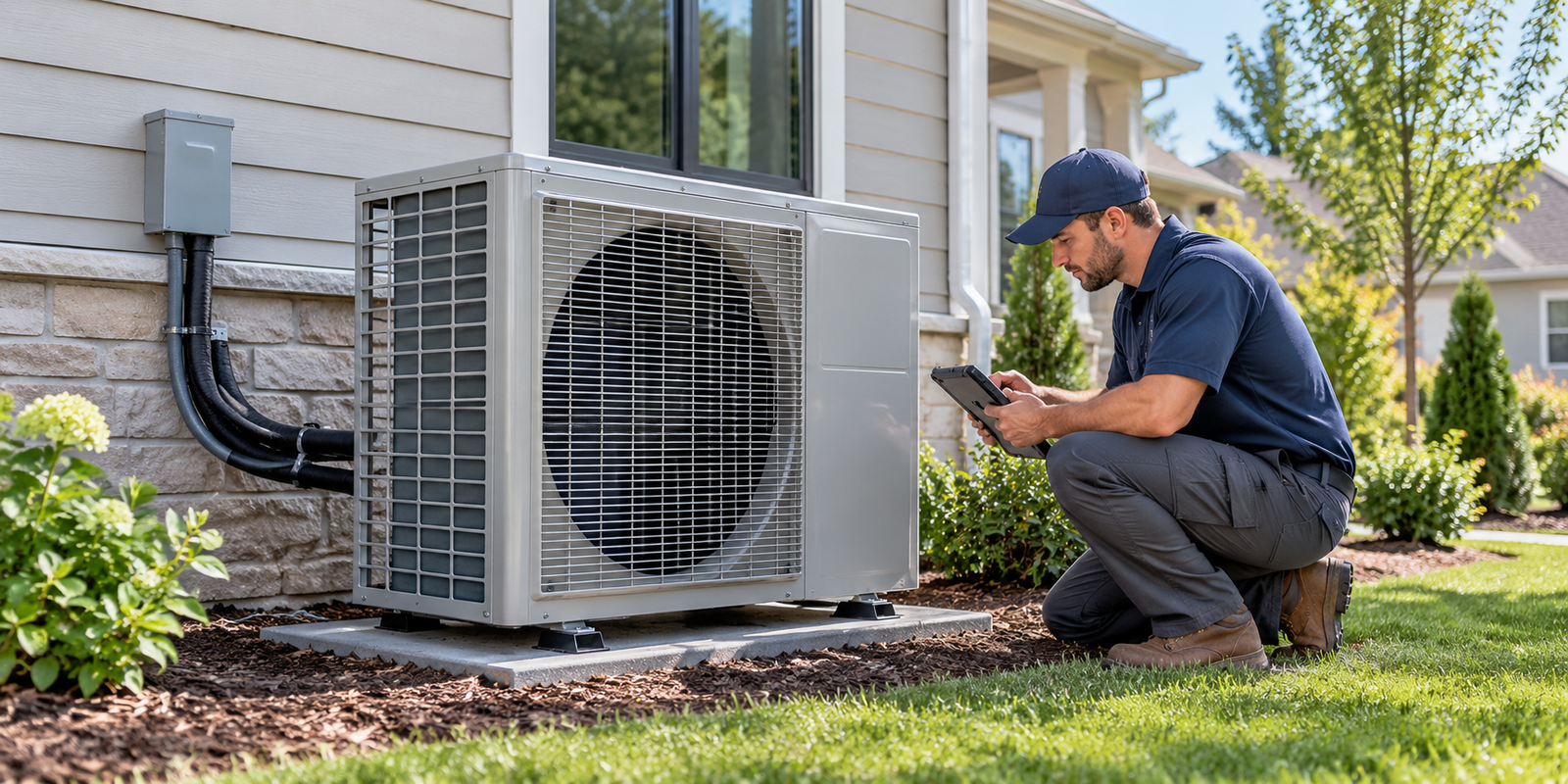
Replacing a heat pump is not simply a matter of selecting a new outdoor unit. The final cost depends on the system type, heating and cooling capacity, efficiency, climate performance, indoor equipment, refrigerant lines, duct condition, electrical work and the amount of installation work included in the proposal.
This guide explains realistic 2026 planning ranges and shows US homeowners how to compare contractor quotes on an equal basis. The figures below are broad budgeting allowances, not substitutes for local written proposals based on a properly calculated heating and cooling load.
1. Heat Pump Replacement Cost in 2026
A complete ducted air-source heat pump project commonly requires a planning allowance of approximately $10,000 to $25,000 or more. A straightforward like-for-like replacement may cost less when the existing air handler, ducts, electrical service, equipment pad and refrigerant route remain suitable. A premium variable-capacity or cold-climate system, extensive duct modifications or electrical upgrades can move the total above the typical range.
| Project type | Broad 2026 planning range | Typical scope boundary |
|---|---|---|
| Ducted air-source heat pump | $10,000–$25,000+ | Outdoor unit, indoor unit and normal installation |
| Ductless single-zone system | $2,000–$7,000+ | One outdoor unit and one indoor head |
| Ductless multi-zone system | $6,000–$17,000+ | Several indoor heads and longer line routes |
| Geothermal heat pump system | $20,000–$50,000+ | Indoor equipment and ground-loop installation |
| Major ductwork or electrical work | Price separately | Can materially increase the project total |
Published estimates vary because some prices cover only the heat-pump equipment and basic labor, while others include an air handler, thermostat, permits, electrical changes, ductwork, removal and disposal. Before comparing totals, require each contractor to list exactly what is included.
2. Ducted Air-Source Heat Pump Cost
A ducted air-source heat pump uses an outdoor unit and an indoor air handler or compatible furnace coil to provide both heating and cooling. It may replace an existing heat pump, central air conditioner, or part of a furnace-and-air-conditioner system.
The lower end of the range usually represents an accessible, standard-efficiency replacement using serviceable existing ducts and electrical infrastructure. Higher prices may reflect variable-capacity equipment, cold-climate performance, a new air handler, long refrigerant-line runs, zoning, duct repairs, a difficult equipment location or a service-panel upgrade.
Ask whether the quoted price includes both the outdoor and indoor matched components. Replacing only one major component may produce an incompatible or improperly rated system and can affect efficiency, performance and warranty coverage.
3. Ductless Mini-Split Heat Pump Cost
Ductless heat pumps can serve homes without central ductwork, room additions and areas that are difficult to condition with an existing system. Costs depend heavily on the number of indoor heads, equipment capacity, wall and ceiling access, condensate drainage, electrical circuits and refrigerant-line length.
A single-zone price should not be compared directly with a whole-home multi-zone quotation. For every quote, record:
- The number and location of indoor units
- The capacity assigned to each room or zone
- The outdoor unit’s total and low-temperature capacity
- Refrigerant-line lengths and concealment method
- Condensate-drain routing
- Electrical circuits and disconnects
- Wall penetrations, patching and exterior line-set covers
- Controls, commissioning and warranty
4. Geothermal Heat Pump Cost
Geothermal or ground-source heat pumps exchange heat with the ground through buried loops or groundwater arrangements. Their installation cost is normally much higher than that of an air-source system because drilling, trenching, excavation, loop materials, site access, soil or rock conditions and restoration are involved.
Do not evaluate a geothermal proposal only by the heat-pump equipment price. Request separate descriptions and prices for the ground loop, drilling or excavation, indoor equipment, circulation pumps, electrical work, permits, testing, landscaping restoration and any backup heating.
5. Capacity, Efficiency and Equipment Tier
Heat-pump capacity is commonly expressed in tons or British thermal units per hour. A larger home does not automatically require a proportionally larger unit. Insulation, windows, air leakage, orientation, climate, occupancy, internal heat gains and duct losses all affect the required capacity.
Higher-efficiency and variable-capacity equipment generally costs more. It may improve comfort, part-load performance, humidity control and noise levels, but the financial value depends on climate, electricity prices, installation quality and how the home is used.
Request the exact outdoor unit, indoor unit and thermostat model numbers. The efficiency rating normally applies to a tested equipment combination, not to an outdoor unit considered alone.
6. Understanding SEER2, EER2 and HSPF2
SEER2 describes seasonal cooling efficiency. EER2 evaluates cooling efficiency under specified test conditions, while HSPF2 describes seasonal heating efficiency. Higher ratings generally indicate greater laboratory-rated efficiency, but they do not correct poor sizing, leaky ducts, inadequate airflow or improper refrigerant charging.
Current ENERGY STAR criteria for split-system heat pumps include minimum SEER2, EER2 and HSPF2 performance requirements. Ask the contractor to provide the applicable ratings for the complete matched system and confirm whether the proposed model carries an ENERGY STAR or cold-climate designation.
7. Cold-Climate Heat Pumps and Backup Heat
A cold-climate heat pump is designed to retain useful capacity and efficiency at low outdoor temperatures. However, the words “cold climate” should not replace a project-specific design.
The contractor should identify:
- The home’s calculated heating load at the local winter design temperature
- The proposed unit’s heating capacity at that temperature
- The temperature at which backup heat may be required
- The type, size and operating cost of the backup system
- The control strategy for switching or combining heat sources
Backup heat may come from electric resistance elements, a gas furnace in a dual-fuel arrangement, or another approved source. Large electric resistance strips can create a substantial electrical load, so their capacity and circuit requirements should appear in the quote.
8. Correct Sizing and the Manual J Calculation
Ask each contractor to perform or provide an accepted room-by-room or whole-building load calculation, commonly described as a Manual J calculation. Replacing the old unit with the same tonnage is not proof that the size is correct, especially if windows, insulation, air sealing or room layouts have changed.
An oversized system may cycle too frequently, reduce dehumidification, waste energy and increase wear. An undersized or poorly selected system may depend excessively on backup heat or fail to maintain comfort during design conditions.
The proposal should also address whether the existing ducts can carry the airflow required by the selected equipment. A correct equipment capacity paired with restricted or undersized ducts can still perform poorly.
9. What a Complete Replacement Quote Should Include
A clear proposal should identify the full system and installation boundary. Look for the following items:
- Outdoor heat-pump unit and indoor air handler, coil or compatible furnace
- Exact model numbers and matched-system ratings
- Thermostat and control equipment
- Equipment pad, mounting brackets and vibration isolation
- Refrigerant lines, insulation, fittings and approved refrigerant
- Condensate drain, trap, pump or overflow protection where required
- Duct transitions, sealing, balancing and modifications
- Electrical circuit, disconnect, breaker and surge-protection work
- Backup-heating equipment and controls
- Permit, inspection and utility coordination
- Removal, refrigerant recovery and disposal of old equipment
- Startup, testing, airflow measurement and commissioning
- Manufacturer registration and labor warranty
- Cleanup and repair of disturbed finishes
If an item is excluded, obtain either a firm separate price or a realistic allowance before selecting the contractor.
10. Major Factors That Change the Final Price
Existing system and replacement scope
Replacing a compatible heat pump in the same accessible location is normally less complex than converting from a furnace, boiler or non-ducted heating system. A conversion may require a new air handler, ductwork, wiring, condensate disposal and backup-heat strategy.
Duct condition
Leaky, damaged, poorly insulated or undersized ducts can reduce efficiency and comfort. Ask whether the contractor inspected the supply and return system, measured static pressure, and included necessary repairs. New ductwork should be priced separately so proposals can be compared fairly.
Electrical capacity
The outdoor unit, air handler and electric backup heat may require new circuits or greater service capacity. If electrical work is anticipated, coordinate it with our Home Rewiring Cost guide and request a documented load calculation before approving a panel or service upgrade.
Installation location and access
Attics, crawlspaces, rooftops, narrow side yards and long material routes add labor. Cranes, scaffolding, structural platforms, drain pumps and additional protection may also affect cost.
Local climate and equipment performance
The selected unit must satisfy both heating and cooling requirements. Cold-weather capacity, defrost behavior, backup heat and summer humidity control can matter more than the headline efficiency rating.
Permits and code-related work
Permit, inspection, refrigerant, electrical, condensate, equipment-clearance and structural requirements vary by jurisdiction. Each proposal should use the same assumptions about code work.
11. Repair or Replace the Existing Heat Pump?
Repair may be reasonable when the equipment is relatively young, the failure is limited, replacement parts are available and the rest of the system is in good condition. Replacement becomes more compelling when the system has repeated failures, a major compressor or coil problem, poor comfort, incompatible components, obsolete controls or expensive refrigerant-related work.
Ask for both a written repair price and a complete replacement price when the decision is uncertain. Compare expected service life, warranty, efficiency, comfort and the likelihood of another major failure—not only the immediate invoice.
Do not use a simple percentage rule as the sole decision. A low-cost repair on a sound system and a similar repair on severely deteriorated equipment are not equivalent choices.
12. Heat Pump Versus Separate AC and Furnace Replacement
A heat pump provides both cooling and heating. In moderate climates it may serve as the main heating system. In colder climates, a properly selected cold-climate system or a dual-fuel arrangement may be appropriate.
When comparing alternatives, consider the complete installed systems:
- Review our Air Conditioner Replacement Cost guide for cooling-only replacement factors.
- Review our Furnace Replacement Cost guide for fuel, venting and heating-system considerations.
- Compare annual operating assumptions using current local electricity and fuel prices.
- Include necessary electrical, duct, control and backup-heat work in each alternative.
The lowest equipment price does not necessarily produce the lowest total ownership cost or the best comfort.
13. Refrigerant and Equipment Compatibility
Newer HVAC equipment may use refrigerants and safety provisions that differ from those in older systems. Ask the contractor to identify the refrigerant, confirm that all indoor and outdoor components are compatible, and explain any required sensors, ventilation measures or installation changes.
Do not assume an existing indoor coil or refrigerant line can automatically remain. The contractor should verify component ratings, line size, condition, cleanliness, pressure requirements and manufacturer instructions.
14. How to Compare Three Contractor Quotes
Give all contractors the same written requirements and request itemized proposals. Before contacting installers, review our 21-point contractor hiring checklist for licensing, insurance, contract and payment checks.
Compare these details side by side:
- Heating and cooling load calculations
- Exact outdoor and indoor model numbers
- Rated capacity at relevant summer and winter conditions
- SEER2, EER2 and HSPF2 ratings
- Cold-climate designation, if required
- Backup-heat type, capacity and controls
- Duct inspection and modification scope
- Electrical and service-upgrade scope
- Refrigerant-line and condensate work
- Permits, inspections, removal and disposal
- Startup, commissioning and airflow verification
- Equipment, labor and extended warranties
- Exclusions, allowances and possible change orders
- Payment milestones and completion schedule
A lower quote may simply exclude work included by another contractor. Resolve every material difference before signing.
15. Questions to Ask a Heat Pump Contractor
- What heating and cooling loads did you calculate for the home?
- Why is this capacity and system type appropriate?
- What are the exact outdoor unit, indoor unit and thermostat model numbers?
- What are the matched system’s SEER2, EER2 and HSPF2 ratings?
- What heating capacity does the unit provide at the local winter design temperature?
- Is backup heat required, and how will it be controlled?
- Did you inspect the ducts and measure available airflow or static pressure?
- Are duct sealing, repair or replacement included?
- Is the existing electrical service adequate for the proposed system?
- Are permits and inspections included?
- What refrigerant does the system use, and are additional safety provisions required?
- Are removal, refrigerant recovery and disposal included?
- What startup tests and commissioning records will I receive?
- What manufacturer, labor and workmanship warranties apply?
- Which items are excluded or subject to an allowance or change order?
16. Rebates, Incentives and Tax Treatment
Utility, state and local heat-pump incentives may depend on equipment certification, climate rating, installation requirements, household eligibility or preapproval. Programs and funding can change, so verify the current rules before ordering equipment.
Do not deduct a rebate or tax benefit from the project budget until eligibility and timing are confirmed in writing. Ask whether the contractor’s price is shown before or after incentives and who is responsible for applications and supporting documents.
17. Frequently Asked Questions
How much does it cost to replace a heat pump?
A complete ducted air-source heat pump project may require approximately $10,000 to $25,000 or more. A straightforward replacement can cost less, while premium equipment, cold-climate performance, ductwork and electrical upgrades can raise the total.
Can I replace only the outdoor heat pump?
Sometimes, but the outdoor and indoor components must be compatible and form an approved matched system. Ask the contractor to document the combination’s capacity, efficiency, refrigerant compatibility and warranty status.
Does a heat pump need backup heat?
That depends on the climate, building load, selected equipment and design strategy. The contractor should compare the unit’s low-temperature capacity with the home’s calculated heating load and explain when backup heat will operate.
Is a higher SEER2 or HSPF2 rating always worth the added price?
Not automatically. The value depends on climate, utility rates, hours of operation, installation quality and the price difference. Request an operating-cost comparison using realistic local assumptions.
How long does heat-pump replacement take?
A straightforward replacement may be completed in one or two working days, but conversions, duct repairs, electrical upgrades, difficult access and inspections can extend the schedule. Obtain a written sequence and completion estimate.
Should every quote include a Manual J calculation?
A credible sizing process should support the proposed capacity. Ask for the load calculation or its documented results instead of accepting square footage or the old unit’s size as the only basis.
18. Homeowner Decision Checklist
Before accepting a proposal, confirm that:
- The contractor evaluated both heating and cooling loads
- The proposed equipment is a documented matched system
- Low-temperature heating capacity has been addressed
- Backup heat and electrical demand are clearly stated
- Ductwork has been inspected rather than assumed adequate
- Every proposal uses the same scope and performance requirements
- Permit, disposal, commissioning and warranties are included
- Rebates are verified independently and not treated as guaranteed
- Exclusions and allowances are written clearly
- Payment milestones follow delivery, installation, inspection and testing
19. Sources and Editorial Notes
- HomeGuide, How Much Does a Heat Pump Cost? (2026): https://homeguide.com/costs/heat-pump-cost
- HomeGuide, Heat Pump vs. AC Cost (2026): https://homeguide.com/costs/heat-pump-vs-ac-cost
- ENERGY STAR, Air-Source Heat Pumps: https://www.energystar.gov/products/air_source_heat_pumps
- ENERGY STAR, Heat Pump Equipment Key Product Criteria: https://www.energystar.gov/products/air_source_heat_pumps/key-product-criteria
- US Department of Energy, Heat Pump Systems: https://www.energy.gov/energysaver/heat-pump-systems
- US Department of Energy Building Science Education, HVAC Proper Sizing of HVAC Systems: https://bsesc.energy.gov/energy-basics/hvac-proper-sizing-hvac-systems
- US Department of Energy, HVAC Sizing Research: https://www.energy.gov/cmei/buildings/articles/hvac-sizing-research
Editorial note: Cost figures are broad US planning ranges assembled from currently accessible sources with different project boundaries. They are not contractor bids. Local climate, labor, equipment, permits, rebates and existing-home conditions can materially change the price. Angi and HomeAdvisor were excluded from this article. Technical recommendations were checked against ENERGY STAR and US Department of Energy guidance.
Reviewed for US terminology, homeowner safety and equal-scope quote comparison. Evidence refresh date: October 3, 2026.